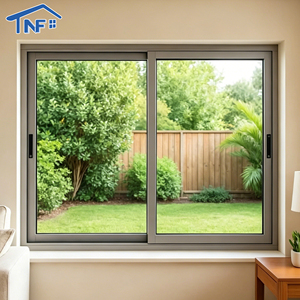
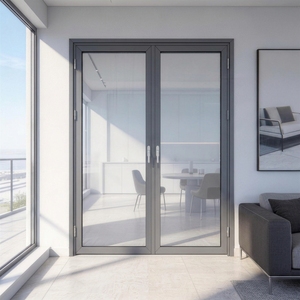
Engineered Aluminum Systems for Modern Kitchen Architectures
Rigid quality control, heavy-gauge 6063-T6 aluminum alloys, and cyclone-grade sealing meet versatile aesthetic demands across residential, villa, and hospitality developments.
180,000 m²
Modern Production Base
1,000,000 m²+
Annual Finished Capacity
100+
R&D Invention Patents
18,000+
Global Projects Delivered
Procurement Intelligence
Future Global Procurement Trends in Aluminum Kitchen Doors
Strategic sourcing considerations for real estate developers, contractors, and national brand importers adapting to revised 2026 building codes and occupant lifestyle dynamics.
Stringent Life-Cycle Cost & Energy Compliance
Global procurement teams are shifting away from uninsulated hollow sections toward thermal break profiles equipped with PA66 GF25 polyamide insulating struts. The enforcement of stricter building codes (such as the updated Australian NCC 2022, New Zealand NZBC H1 Clause, and American ASHRAE 90.1) demands lower U-values (under 1.6 W/m²·K). Procurement contracts now routinely demand verified laboratory thermal simulation and airtightness validation to avoid costly site retrofit liabilities.
Prefabrication & Integrated Modular Fitments
Site installation labor constraints across Australia, North America, and Europe have spurred strong demand for factory-integrated sub-assemblies. B2B buyers favor OEM suppliers capable of pre-assembling sub-frames, integrated flyscreens, child-safety restrictors, and factory-machined mortise locks. Supplying jobsite-ready modular door assemblies reduces on-site contractor installation errors by more than 40% and shortens overall project handover lead times.
Corrosion Integrity for Outdoor Kitchen Spaces
Al-fresco indoor-outdoor kitchen setups have expanded dramatically, creating distinct challenges where cooking grease, high steam, cleaning acids, and exterior marine atmospheric salt interact. Buyers require specialized high-micron powder coatings (Qualicoat Class 2 certified) or anodized finishes exceeding 25 microns. Hardware elements such as rollers, multi-point lock pins, and hinges must be certified Grade 304 or 316 marine-grade stainless steel to ensure lifetime operational reliability.
Technological Trajectory
Engineering Advances: The Evolution of Aluminum Kitchen Doors
How manufacturing paradigms are moving beyond conventional doors toward high-transmittance, ultra-narrow profiles and acoustic barrier technologies.
| Evaluation Parameter | Conventional Aluminum Joinery | Next-Generation DERCHI OEM/ODM Systems | Engineering Benefit |
|---|---|---|---|
| Alloy Metallurgy | Recycled aluminum scrap mixtures | Primary 6063-T6 virgin billets with strict Si-Mg ratios | Tensile strength ≥ 205 MPa, superior anodizing yield and zero extrusion defects |
| Visible Sightlines | 70mm – 95mm wide, bulky profiles | Ultra-slim 18mm – 32mm minimalist visual stiles | Over 90% glass ratio, maximizing natural daylight for modern kitchen interiors |
| Multi-Point Locking | Single latch or two-point tongue lock | Patented 4-Side 6-Point Anti-Theft multi-point lock | High mechanical anti-pry resistance and uniform gasket compression around the perimeter |
| Corner Joint Assembly | Mechanical screw-tightened miters | Pneumatic corner crimping with dual-component glue injection | Structural water seal prevents miter corner leaks under severe positive/negative wind loads |
| Glazing Technology | Single 5mm / 6mm float or low-grade IGUs | Double/Triple Tempered Low-E with Warm Edge & Argon fill | Solar Heat Gain Coefficient (SHGC) fine-tuned for regional environmental zoning |
Flush Sill Barrier-Free Track Engineering
Kitchen doors increasingly bridge interior pantries with exterior decks. Modern systems employ embedded concealed drainage gutters with flush threshold transitions compliant with international accessibility barrier-free living regulations (ADA & universal design guidelines), eliminating tripping hazards without sacrificing AS 2047 300Pa water penetration thresholds.
Acoustic Decoupling & Odor Isolation
Open-concept architectural floor plans demand that modern kitchen partition systems deliver substantial acoustic suppression (Rw 35dB - 42dB) to contain food-preparation noise while deploying multi-chamber EPDM co-extruded foam perimeter gaskets that prevent cooking fumes and moisture migration into adjacent living zones.
Motorized Smart Automation & IoT Sync
High-end residential builds now integrate ultra-quiet brushless DC linear actuators concealed directly inside the top jamb. These units interface seamlessly with central home automation systems via KNX, Zigbee, or Matter protocols, enabling contactless kitchen sliding door operation for enhanced hygienic prep environments.
Enterprise Superiority
Why Tier-1 Contractors and Global Importers Trust DERCHI
Operating from our 180,000 m² advanced manufacturing hub in Foshan, Guangdong Dejiyoupin Doors and Windows Co., Ltd. delivers comprehensive OEM/ODM solutions backed by deep technical expertise.
Engineering R&D Team
Over 30 dedicated facade, fenestration, and structural engineers provide shop-drawing drafting, thermal-bridge modeling, and glass load calculations tailored to precise wind zone requirements.
Zero-Error Automation
High-precision German and Italian 5-axis CNC processing centers handle precision mitering, lock recess milling, and automatic corner injection, ensuring dimensional variances stay below ±0.5mm.
International Certification Grand Slam
Holding official test endorsements including AS 2047 (Australia), CSA (Canada), NFRC (USA), CE (Europe), and ISO 9001 quality management system certifications for streamlined customs clearance and certifier approval.
Export Packaging & Logistics
Protected with high-micron protective films, custom-molded composite corner guards, heavy-duty honeycomb wrapping, and fumigated steel-strapped wooden crates to guarantee damage-free maritime transit.
Procurement Knowledge Base
Frequently Asked Questions: OEM/ODM Aluminum Kitchen Doors
Key technical, testing, and shipping details to inform your sourcing decisions and supplier verification.
What are the key differences between standard sliding kitchen doors and heavy-duty hurricane-impact models? +
Standard residential patio or kitchen sliding doors typically use profile wall thicknesses between 1.2mm and 1.6mm with basic monolithic or standard double glazing. By contrast, our hurricane-impact systems are engineered with heavy-gauge 2.0mm to 3.0mm primary structural extrusions, reinforced steel internal mullions, and laminated architectural safety glass (incorporating DuPont SentryGlas or 1.52mm PVB interlayers). Furthermore, heavy-duty impact systems feature deep multi-point locking mechanisms and heavy cast-roller assemblies designed to withstand severe cyclic wind pressure and high-velocity windborne debris up to ASTM E1886/E1996 and AS 2047 standards.
How does your factory verify thermal transmittance and air infiltration compliance for North America and Oceania? +
Our engineering center utilizes thermal finite element analysis software (such as THERM and WINDOW) to model fenestration assemblies, matching regional climate specifications. For projects across Australia and New Zealand, we supply official test certificates demonstrating compliance with AS 2047, confirming air infiltration ratings below 1.0 L/s·m² and water resistance up to 450Pa+. For North American destinations, we provide full NFRC-style U-factor and SHGC simulations, combining warm-edge spacers, low-conductance thermal barriers, and specialized soft-coat Low-E glass build-ups.
What customization capabilities are available under your OEM and ODM programs? +
Our OEM/ODM capabilities encompass custom aluminum extrusion die design, bespoke hardware development, custom powder coating finishes (including Qualicoat Class 1, 2, and architectural fluorocarbon PVDF), woodgrain sublimation transfers, and integrated hardware configurations. We can integrate client-supplied branded hardware (such as Siegenia, HOPPE, or Roto) or deploy our proprietary patented mechanisms, including our Four-Side Six-Point security locks and heavy-duty concealed bearing hinges.
What is the standard production lead time and minimum order quantity (MOQ) for custom project extrusions? +
For standard profile systems utilizing existing tooling and catalog finishes, our standard manufacturing lead time is approximately 25 to 35 calendar days following shop-drawing sign-off. For custom extrusion shapes requiring new dies, we allocate 10 to 15 days for die creation and sample extrusion sign-off, followed by a 30-day production run. Our typical project MOQ starts at 50 square meters for standard configurations, while custom proprietary extrusion profiles generally require 300 square meters or a committed container-load equivalent.
How do you protect glass panels, fine finishes, and pre-adjusted hardware against damage during sea transit? +
Export consignments follow a thorough multi-stage protection protocol. Anodized and powder-coated profile surfaces are laminated with UV-stable PE protective films. Corners are shielded with thick polyethylene corner bumpers, and door panels are wrapped in water-resistant closed-cell EPE foam. Complete structural panels are secured into solid timber crating manufactured from ISPM 15 heat-treated, fumigated wood, interleaved with desiccants to counter container condensation throughout typical ocean voyages.
Collaborate with an Established Fenestration Manufacturer
Provide your architectural schedule, custom door dimensions, or project specifications. Our structural engineering team will prepare comprehensive shop drawings, structural calculations, and quotation packages within 24 hours.