180,000 m²
Modern Intelligent Production Hub
1,000,000 m²+
Annual High-End Fenestration Output
100+
Proprietary Engineering Patents
18,000+
Projects Successfully Delivered Worldwide
Factory Direct Selection
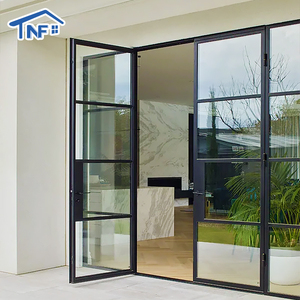
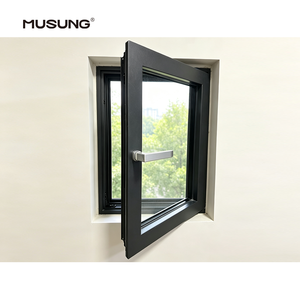
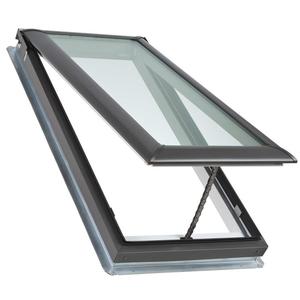
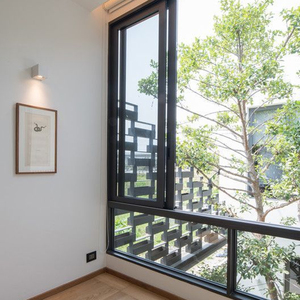
Engineered Architectural Systems & Recommended Openings
Direct-from-manufacturer fenestration lines precision-engineered for coastal durability, severe cyclonic resistance, and seamless architectural indoor-outdoor integration.
Technical Whitepaper
Engineering Architecture of High-Security Aluminium Mesh Doors
An authoritative evaluation of raw material metallurgy, mechanical shear strength, and anti-corrosion benchmarks for high-volume commercial and residential procurement.
In modern architectural fenestration, the specification of Aluminium Mesh Doors and Security Screens has transformed from an auxiliary insect deterrent into a primary structural barrier against physical intrusion, extreme cyclonic winds, and airborne debris. Sourcing directly from top-tier Chinese manufacturing clusters like Foshan gives global developers, distributors, and engineering contractors significant competitive leverage in unit cost, design customization, and metallurgical precision. However, achieving compliance with strict international codes—such as Australian Standard AS 5039 / AS 5041 (Security Screen Doors) and AS 2047 (Windows and External Glazed Doors)—requires an in-depth understanding of profile engineering, mechanical fastening, and electro-chemical compatibility.
At the center of high-performance aluminium mesh doors is the synergy between the extruded alloy frame and the infill security mesh. While conventional insect screens rely on flexible fiberglass or low-gauge aluminum wire, heavy-duty security systems use high-tensile AISI 316 marine-grade stainless steel woven mesh with wire diameters ranging from 0.80 mm to 1.0 mm, exhibiting structural tensile ratings exceeding 900 MPa. When embedded into heavy-wall structural 6063-T6 or 6061-T6 architectural aluminum alloy frames, the door functions as an energy-absorbing shield capable of withstanding severe dynamic impacts, knife-shear attempts, and jemmy attacks without sacrificing natural ventilation or optical clarity.
| Performance Parameter | Standard Flyscreen / Expanded Mesh | Premium Perforated Aluminum Sheet | High-Tensile 316 Marine Stainless Mesh (Derchi Grade) |
|---|---|---|---|
| Alloy Matrix & Tensile Strength | Commercial Aluminum / Low Carbon (<350 MPa) | 5052-H32 Structural Aluminum (approx. 210-260 MPa) | AISI 316 Marine Stainless Steel (≥900–1150 MPa) |
| Impact Resistance (AS 5041 / EN 1627) | Fails dynamic impact; easily penetrated | Resists low-velocity impacts (up to 60 Joules) | Surpasses multiple 100+ Joule dynamic impacts (Passes AS 5041) |
| Corrosion Resistance (Neutral Salt Spray) | 120–240 Hours before pitting failure | 1,000–2,000 Hours (Powder coated) | 3,000+ Hours ASTM B117 / AS 2331.3.1 (Extreme Marine Safe) |
| Forced Entry Security Level | None (Insect Protection Only) | Medium Barrier (Deterrent Grade) | Maximum Security (Anti-jemmy, Anti-knife shear, Anti-pull) |
| Airflow & Optical Transmission | High Airflow / Moderate Visibility | Restricted Airflow (approx. 40% open area) | Optimized Natural Ventilation (approx. 60% open area, clear outward view) |
Market Intelligence
Future Procurement Trends in Aluminium Security Fenestration
Strategic directions shaping international supply chains, sustainability benchmarks, and intelligent access systems over the next decade.
1. Monolithic Multi-Point Security & Screwless Clamping
Traditional systems fastened mesh using visible mechanical rivets or self-tapping screws, which often created galvanic corrosion cells between dissimilar metals. The trend has shifted decisively toward patented internal mechanical wedge-clamping systems. These isolate the stainless mesh from the aluminum extrusion via insulated PVC gaskets, eliminating contact while generating higher pull-out resistance under heavy loads.
2. Smart Biometric & Multi-Directional Locking Integration
Commercial developments and modern luxury villas require security doors that blend into home automation networks. Procurement specifications increasingly require factory integration of multipoint motorized locking systems—such as our patented Four-Side Six-Point Anti-Theft Lock—compatible with biometric access, RFID tokens, and dry-contact smart home interfaces.
3. Climate-Resilient & Cyclone-Rated Profiles
With more frequent extreme weather events across coastal Australia, New Zealand, the Caribbean, and Florida, developers are prioritizing cyclone-certified fenestration. High-end aluminium mesh doors must now withstand continuous cyclic wind loads exceeding 3.5 kPa and missile impact testing without perimeter dislodgement.
4. Supply Chain Decarbonization & Circular Metallurgy
Large-scale commercial tenders in Oceania and Europe now evaluate the embodied carbon in structural profiles. Leading manufacturers are investing in low-carbon smelting processes, certified recycled aluminum billets, and volatile organic compound (VOC)-free architectural fluoropolymer and powder coatings (such as AkzoNobel Interpon and PPG Duranar), providing transparent Environmental Product Declarations (EPDs).
Factory Strengths
Why DERCHI Is the Preferred Export Manufacturing Partner
Engineered in Foshan, proven globally. Decades of specialized manufacturing de-risk containerized deliveries for overseas developers and distributors.
Massive Smart Production Base
Operating from an advanced 180,000 m² manufacturing facility in Foshan, China, DERCHI delivers over 1,000,000 m² of certified fenestration annually. Automated CNC cutting centers, pneumatic assembly lines, and calibrated corner-crimping equipment ensure millimeter-level dimensional accuracy across entire container batches.
Comprehensive Global Certification
DERCHI systems hold a complete set of international quality credentials, including Australian AS 2047, AS 1288, CE mark, NFRC certification, CSA standards, and ISO 9001. Every production run is backed by traceable material test reports and verified water, air infiltration, and structural deflection results.
30+ In-House R&D Engineers
Our engineering team reviews project plans, site wind loading (N1–N6 / C1–C4 classifications), Bushfire Attack Levels (BAL-40/FZ compatibility), and acoustic abatement needs. We supply complete shop drawings, structural calculations, and custom extrusions tailored to project requirements.
Export Packaging & Ocean Logistics
Over-the-water freight demands heavy-duty protective packing. Units are wrapped in protective polyethylene film, fitted with impact-resistant composite corner guards, and crated in fumigated non-coniferous timber crates with desiccant packs. Direct shipping from South China ports delivers goods to Sydney, Melbourne, Auckland, or Brisbane in 13–20 days.
Procurement Guide
Frequently Asked Questions by Overseas Buyers
Detailed technical and commercial answers addressing common engineering challenges in cross-border aluminium mesh door procurement.
How does your factory prevent galvanic corrosion between the 316 stainless mesh and the aluminum frame?
Galvanic corrosion is the primary cause of premature failure when combining stainless steel mesh with aluminum frames in coastal environments. Our manufacturing process uses a dual-isolation engineering protocol: First, the woven stainless steel wire undergoes a thermoset pretreatment and is finished with an architectural-grade epoxy powder coating. Second, the perimeter of the mesh is secured inside the extrusion using co-extruded Santoprene or specialized non-conductive PVC isolation wedges. This prevents direct metal-to-metal contact between the stainless steel and the aluminum profile, ensuring our doors pass the 3,000-hour neutral salt-spray test (ASTM B117) without galvanic pitting.
Can your security mesh doors meet Australian AS 5039 / AS 5041 and AS 2047 certification?
Yes. DERCHI fenestration profiles are engineered specifically to comply with AS 2047, AS 1288, and relevant security screen door testing under AS 5041. Our systems pass three key mandatory tests: (1) The Dynamic Impact Test, which uses a calibrated 42 kg impact bag delivering multiple 100-Joule blows; (2) The Jemmy Test, which applies mechanical lever forces to locks and hinges; and (3) The Knife Shear Test, which simulates repeated blade punctures under sustained force. Test certificates and engineering calculations are supplied with your project documentation for quick review by local private building certifiers.
What are your minimum order quantities (MOQ) and lead times for custom developer orders?
Because our 180,000 m² factory runs flexible CNC machining centers alongside high-speed lines, we accommodate both tailored luxury residential orders and high-volume commercial contracts. For standard architectural finishes (e.g., Matt Black, Pearl White, Monument Grey, or Clear Anodized), our MOQ starts at 50 m² or one 20GP shipping container for mixed systems. Lead times from final sign-off of shop drawings to ex-factory dispatch are typically 25 to 35 business days. Transit time by sea to major Oceania or US West Coast ports takes an additional 14 to 22 days.
Can mesh doors be powder-coated to match specific architectural color schedules?
Yes. We operate fully automated vertical and horizontal electrostatic powder-coating lines utilizing licensed AkzoNobel, PPG, and Tiger Drylac exterior powders. We match any RAL color, Colorbond architectural spectrum (popular in Australia and New Zealand), or custom lab-matched master sample. Coatings are applied at an average thickness of 60 to 80 microns and backed by commercial warranties covering chalking, cracking, and film integrity in high-UV installations.
How does your factory handle custom sizes, structural openings, and shop drawing submittals?
We follow a structured 8-step engineering process. Upon receipt of your architectural schedules, window/door schedules, or CAD drawings, our technical department generates 1:1 scale DWG shop drawings. These detail sub-frame interfaces, fixing points, flashing details, water drainage weeps, structural mullion moments of inertia, and hardware placements. Cutting only starts after your architect, builder, or engineering consultant signs off on the submittals.
What hardware brands and multi-point locking solutions can be specified?
We offer our own proprietary, patented locking mechanisms—such as the Four-Side Six-Point Anti-Theft Lock—as well as leading international architectural hardware options. Depending on your market and target budget, you can specify Australian Whitco/Doric systems, German Roto, Siegenia, or G-U multipoint gearboxes, as well as marine-grade 304/316 stainless steel hinges and flush pulls.
Partner with China's Premier Aluminium Mesh Door Manufacturer
Whether you require full-container architectural supplies for multi-residential housing, hurricane-rated projects, or exclusive regional distributorships, our engineering team is ready to evaluate your specifications.
Get a Quote