Precision-Engineered Door & Window Systems
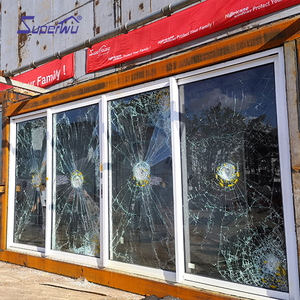
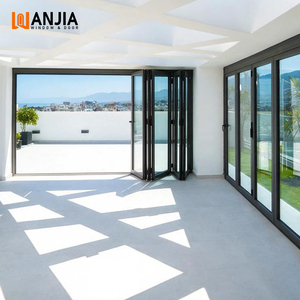
Explore heavy-duty architectural sliding, folding, and entry assemblies certified for extreme structural loads, cyclone resistance, and multi-point perimeter security.

1. The Architectural & Engineering Anatomy of Aluminium Jali Doors
The term Aluminium Jali Door has evolved from traditional ornamental Indian and Middle Eastern latticework (mashrabiya and perforated screens) into one of the global fenestration market's most technically sophisticated categories. Modern jali doors integrate structural architectural aluminum extrusions, micro-woven stainless steel security meshes (SS304/SS316), precision CNC perforated panels, and multi-point perimeter locking assemblies into a cohesive structural envelope. Specifying and sourcing these specialized systems requires rigorous technical scrutiny to balance unobstructed natural cross-ventilation, insect exclusion, solar shading, and forced-entry deterrence.
Unlike standard flyscreen setups that employ fragile fiberglass or synthetic weaves anchored by PVC splines, commercial-grade aluminium jali doors engineered by tier-one manufacturers utilize heavy-wall 6063-T5 or 6063-T6 architectural aluminum alloy frames (ranging from 1.6 mm to over 3.0 mm nominal wall thickness). These frames feature specialized internal retainers, such as chemical bonding wedges and mechanical screw-clamp extrusion channels, that prevent the mesh from being kicked out or pried away from the structural profile. The result is a resilient barrier that withstands dynamic impact loads exceeding 100 Joules without compromising visual transparency or architectural aesthetics.
Technical Insight: Engineering tests under AS 5039 (Security Screen Doors) and EN 1627 RC2/RC3 indicate that over 65% of security failures in inferior screen doors occur not from mesh perforation, but from frame deflection and spline pullout. High-integrity manufacturers eliminate spline retention in favor of dual-point clamping and perimeter mechanical anchors.
| Performance Parameter | Commercial Grade (DERCHI Standard) | Standard Market Grade | Architectural Test Benchmark |
|---|---|---|---|
| Aluminium Alloy Profile | Primary Billet 6063-T5 / 6063-T6 | Secondary Scrap Ingot / Mixed Alloy | Tensile Strength ≥ 160 MPa; Yield ≥ 110 MPa |
| Jali Mesh Core Material | Marine Grade 316 Stainless Steel (0.80mm – 1.0mm) | Grade 201 Stainless / Galvanized Wire | ASTM B117 3,000+ Hr Neutral Salt Spray |
| Mesh Retention Engineering | Patented Interlocking Grip & High-Tack Structural Adhesive | Rubber Spline / Surface Pop-Rivets | Dynamic Impact AS 5041 & Anti-Jemmy Rigidity |
| Surface Coating Spec | Qualicoat Class 2 Fluorocarbon PVDF / AkzoNobel Powder | Standard Monolayer Polyester Coating | AAMA 2604 / AAMA 2605 Architectural Specification |
| Locking Integration | Four-Side Six-Point Multi-Lock Mechanism | Single-Point Mortise Latch | Forced Entry Resistance (EN 1630 / AS 5039) |
| Acoustic & Thermal Bridging | PA66 Polyamide Thermal Break with EPDM Gaskets | Non-Thermal Solid Aluminum Extrusion | U-factor down to 1.6 W/m²K (NFRC / AS 2047) |
2. Strategic Manufacturer Evaluation: What Separates Trusted Factories from Fabricators
Commercial project managers, developers, and fenestration importers must distinguish between mere assemblers and genuine vertically integrated manufacturing plants. In hubs like Foshan, Guangdong—the aluminum capital responsible for over 30% of global architectural fenestration exports—the spectrum spans from manual cut-and-snap workshops to high-precision smart facilities spanning over 180,000 square meters. Sourcing high-performance aluminium jali doors and associated bifold, sliding, and casement packages demands vetting along four critical operational axes:
Metallurgical Purity & Die Accuracy
Top factories enforce direct control over raw aluminum extrusion billets. Using primary 6063-T5 aluminum rather than re-melted scrap ensures uniform tensile strength, consistent anodizing color absorption, and zero micro-voids along CNC-milled hinge and lock mortises.
Proprietary Security Mechanism R&D
Standard off-the-shelf locks invite vulnerability. Premier manufacturers maintain dedicated R&D divisions (30+ engineers) that design proprietary multi-point engagement hardware, including Four-Side Six-Point locking hardware that secures the perimeter simultaneously against crowbar intrusion.
Comprehensive Accreditations (Grand Slam)
Global specifications require third-party verification. Look for factories with full laboratory verification: Australian AS 2047, North American NFRC and NOA Hurricane Impact ratings, European CE conformance, and ISO 9001 certified manufacturing quality workflows.


3. Future Procurement Trends: The Next Generation of Architectural Jali Systems
As international energy conservation mandates converge with extreme climate challenges and urban density security concerns, the procurement trajectory for aluminium jali doors is undergoing four transformative structural shifts:
A. Integration of High-Transparency Stainless Micro-Weaves with Polyamide Thermal Breaks
Historically, jali or screen doors were installed as auxiliary external barriers, creating thermal gaps and aesthetic clutter. The market is shifting decisively toward integrated thermal break dual-sash assemblies. In this configuration, a thermally broken PA66 extrusion houses both an insulated glazing unit (Low-E argon-filled double glazing) and an independently operable high-tensile 316 stainless steel jali screen sash inside a single, unified frame track. This ensures compliance with stringent energy conservation codes (such as Australia's NCC 2022 7-star NatHERS targets and New Zealand's NZBC H1 standards) while granting occupants open-ventilation security without bug intrusion.
B. Precision Laser-Cut & CNC Sculpted Architectural Screens
Beyond traditional diamond and square woven weaves, luxury hospitality and high-end residential estates increasingly specify custom CNC-milled solid aluminum billet jali sheets (ranging from 4.0 mm to 8.0 mm solid plate). These custom architectural grilles reflect parametric Islamic geometry, tropical lattice designs, or modernist motifs. When finished with ultra-durable AAMA 2605 fluorocarbon coatings, these decorative jali plates function simultaneously as passive solar shading panels, privacy curtains, and certified structural forced-entry barriers.
C. Biometric Smart-Hardware Convergence & Hidden Concealed Closers
Procurement teams are retiring mechanical keyed mortises in favor of motorized multi-point locks compatible with home automation protocols (Zigbee, Matter, Z-Wave). Top-tier factories now factory-wire integrated concealed wiring channels through the hinge stiles of aluminium jali doors. This facilitates automated deadbolt engagement, biometric fingerprint scanning, 3D face recognition, and integrated door status sensors directly sealed against external weather exposure.
D. Coastal Marine-Grade Passivation & Decoupled Fastener Metallurgy
With massive development along coastal belts in Oceania, Southeast Asia, Florida, and the GCC, galvanic corrosion has proven to be the primary cause of premature door failure. Future-proof procurement requires factories to employ specialized isolation insulators (such as Delrin washers and EPDM shims) between stainless steel fasteners/wire meshes and the parent aluminum extrusions. This design prevents electrochemical potential disparities from breaking down the powder coat finish and causing blistering in salt spray environments.
Industrial Scale That De-Risks Project Timelines
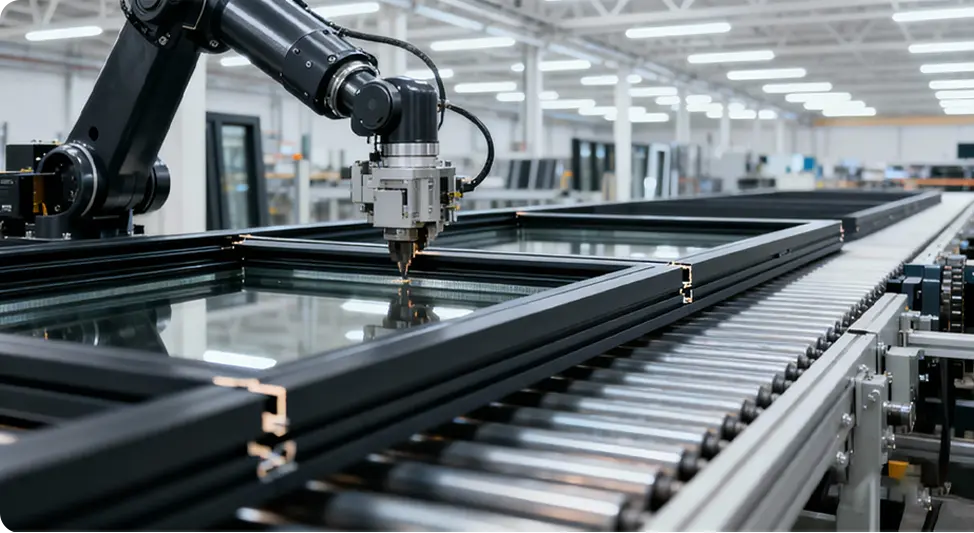
Operating from our 180,000 m² state-of-the-art facility in Foshan, Guangdong Dejiyoupin Doors and Windows Co., Ltd. (DERCHI) stands among China's Top 10 fenestration manufacturers. Backed by automated German CNC processing centers, robotic milling lines, and strict 360° quality control, we provide absolute engineering certainty for global builders, developers, and distributors.
4. The Specifier's Factory Audit Checklist: Quality Assurance Protocols
When conducting international procurement or auditing an OEM/ODM factory for high-performance aluminium jali doors, architectural engineers must insist on strict documentation across the entire manufacturing pipeline:
1. Mill Test Certificates (MTC)
Validate the extrusion alloy composition. The extrusion certificate must indicate genuine 6063-T5 aluminum with an elongation index exceeding 8% and web-to-flange dimensional tolerances adhering strictly to EN 755-9 or ASTM B221 precision guidelines.
2. Salt Spray & Cross-Hatch Adhesion
Demand documented neutral salt spray test reports (ASTM B117 / ISO 9227) demonstrating a minimum of 1,000 hours for standard powder coating, and 3,000 hours for marine applications. Finish adhesion must clear Class 0 under ISO 2409 cross-cut tests.
3. Pre-Shipment Rigidity & Corner Joint QC
Examine the mechanical joinery. Heavy-duty jali door leaves must incorporate heavy extruded aluminum corner cleats reinforced with pneumatic crimping or two-component epoxy injection, preventing diagonal sash sag over 100,000 operational cycles.
5. Frequently Asked Questions (FAQ) for Global Buyers & Importers
Essential guidance addressing engineering, regulatory compliance, logistics, and customization for international door procurement.
What is the difference between an aluminium jali door and a standard security screen door? +
Can aluminium jali door systems achieve compliance with Australian AS 2047 and AS 1288 standards? +
How do you prevent galvanic corrosion between the stainless steel jali mesh and the aluminium frame? +
Can jali screens be integrated directly into thermal break bifold and sliding patio systems? +
What are the lead times, packaging standards, and container loading protocols for overseas shipments? +
Can your factory accommodate custom architectural CNC jali patterns and bespoke extrusion dies? +
How does the Four-Side Six-Point locking mechanism enhance door security? +
What are the Minimum Order Quantities (MOQ) and warranty terms for project developers? +
Ready to Engineer Your Architectural Door & Window Package?
Connect directly with our engineering team for preliminary structural shop drawings, wind load calculations, and comprehensive container-direct manufacturing quotes.
Inquire Now