High-Performance Aluminum Storm Window Systems
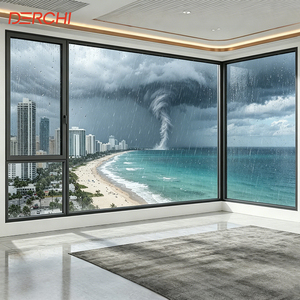
Precision-manufactured in our 180,000 m² smart production base in Foshan. Designed for extreme cyclonic winds, negative air pressure deflection, and driving rain barrier integrity.
Structural Metallurgy & Impact Dynamics in Storm Window Engineering
Evaluating Chinese aluminum storm window fabrication against international engineering standards: ASTM E1886/E1996, Florida Building Code TAS 201/202/203, and AS 2047 cyclonic protocols.
Primary 6063-T6 Structural Billets
DERCHI sources exclusively virgin A00 primary aluminum ingots. Using precisely aged 6063-T6 and 6061-T6 alloys with minimum web wall thicknesses of 2.0mm to 3.0mm, our profiles achieve an ultimate tensile strength exceeding 240 MPa and yield strength beyond 190 MPa, eliminating permanent frame deflection under 5000 Pa cyclic loads.
SGP vs PVB Interlayer Resins
For high-velocity hurricane zones (HVHZ), standard polyvinyl butyral (PVB) exhibits significant creep after glass fracture. We integrate SentryGlas® Plus (SGP) ionoplast structural interlayers, which deliver 5 times the tear strength and 100 times the rigidity of conventional PVB, ensuring the glass membrane stays rigid and sealed even during multi-hour cyclonic battering.
Isobaric Decompression Drainage
Water infiltration in coastal windstorms occurs when external dynamic pressure forces rainwater through weep channels. DERCHI's proprietary three-stage isobaric decompression cavity equalizes internal chamber air pressure with exterior wind pressure, ensuring positive gravity drainage even under 700 Pa sustained water head conditions.
Technical Specification Matrix: Standard vs. DERCHI Impact Storm Grade
| Performance Criterion | Commercial Grade (Generic) | DERCHI High-Velocity Storm Series | International Standard Benchmark |
|---|---|---|---|
| Alloy Metallurgy & Purity | Recycled / Secondary Alloy 6063-T5 | Virgin A00 Electrolytic 6063-T6 / 6061-T6 | ASTM B221 / GB 5237.1 High Precision |
| Profile Thickness (Load Bearing) | 1.2mm – 1.4mm | 2.0mm – 3.2mm Multi-Chambered | AS 2047 Structural Deflection Span Limits |
| Glazing Membrane Architecture | 5mm + 9A + 5mm Insulated Annealed | 6mm Low-E + 12A + (6mm + 1.52 SGP + 6mm) | ASTM E1886 / TAS 201 Large Missile |
| Design Pressure (DP) Threshold | DP 25 to DP 35 (+/- 1400 Pa) | DP 65 to DP 100+ (+/- 4800 Pa) | Florida Building Code HVHZ & AS 4055 C4 |
| Locking & Perimeter Hardware | Single/Dual Point Zinc Cam Handles | Patented 4-Side 6-Point Gear Drive (SS316) | PAS 24 / Forced Entry Prevention |
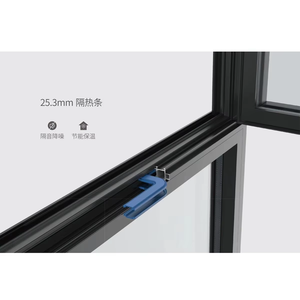
| Thermal Core Decoupling | Non-Thermal or Standard PVC Bars | 24mm - 34mm Polyamide PA66 GF25 Struts | NFRC 100/200 & NZBC H1 Compliance |
Future Procurement Trends for B2B Window Importers & Specifiers
Macro-shifts in global building energy directives, supply chain decarbonization, and technical requirements shaping international fenestration sourcing.
Decarbonization & Low-Carbon Aluminum
Global environmental disclosures (such as EU CBAM and LEED v4.1) are compelling overseas developers to scrutinize the embodied carbon of aluminum extrusions. Chinese tier-1 extruders are pivoting rapidly to renewable hydropower-smelted primary billets, lowering embodied footprint from 16 kg CO2e/kg to sub-4 kg CO2e/kg, enabling builders to capture green building compliance credits without compromising yield strength.
Pre-Glazed Modular Façade Cassettes
Escalating on-site carpentry and glazing labor costs in North America, Australia, and Western Europe are driving procurement teams toward 100% factory-glazed, unitized knock-down or fully crated modular units. Pre-torqued hardware, laser-calibrated gasket installations, and pre-applied weather-flashing flanges reduce jobsite installation overhead by up to 60% compared to site-glazed legacy systems.
Stringent Dual-Function: Acoustic + Blast
Modern coastal high-rises and urban luxury properties require dual-threat engineering. Storm windows are increasingly expected to combine windstorm kinetic dampening with high Sound Transmission Class ratings (STC 40+ to 45) and localized seismic drift tolerance. Specifiers are actively dropping single-purpose vendors in favor of multi-hazard certified suppliers capable of consolidating test certifications.
Engineering & Hardware Innovations in Storm Window Systems
How intelligent fabrication, automated CNC machining centers, and patented multi-point locking geometries have revolutionized system reliability.
Patented 4-Side 6-Point Gear Locking
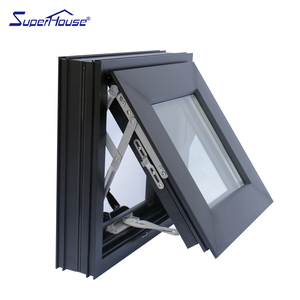
Ordinary storm windows bow outwards under negative suction loads, causing perimeter perimeter gasket seal failure. DERCHI incorporates an exclusive patented multi-point perimeter gear transmission mechanism that drives dual-direction hardened steel mushroom cams into reinforced 304/316 stainless strike plates along all four sash faces simultaneously, locking the sash into the master frame like a bank vault door.
Thermally Broken Narrow Sightlines
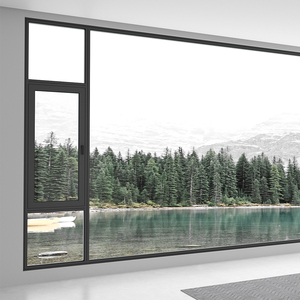
Architects demand panoramic glass surfaces without bulky, industrial mullions. Utilizing high-density reinforced polyamide insulating struts (PA66 GF25) mechanically rolled into extrusion cavities, DERCHI systems decouple indoor and outdoor temperature zones to achieve U-factors as low as 0.22 BTU/(h·ft²·°F) [1.25 W/m²K] while slimming visible frame profiles to just 48mm.
Dual-Corner Joint Mechanical Crimping
Traditional screw-fastened corners loosen and leak over decades of temperature swings. DERCHI utilizes automated dual-corner mechanical punch crimping infused with structural two-component epoxy adhesive (Henkel glue). This cold-welds aluminum profiles into a monolithic structural frame capable of supporting heavy 120 kg triple-glazed impact panels without sash sagging.
Guangdong Dejiyoupin Doors and Windows Co., Ltd. (DERCHI)
A premier Chinese architectural fenestration enterprise supplying developers, builders, and distributors across Australia, New Zealand, North America, and Europe.
Smart Production Base
Annual System Capacity
Patented Innovations
Completed Global Projects
Full Certification Grand Slam
Audited and verified compliant with Australian Standard AS 2047, US NFRC & CSA standards, European CE conformity, and specialized High-Velocity Hurricane Zone test protocols.
30+ R&D Engineering Cadre
Dedicated engineering division providing complimentary CAD opening schedules, shop drawing production, finite element structural deflection calculations, and thermal modeling.
Oceania & Americas Logistics
Expert export palletizing with multi-layer PE film, 5mm edge guard protectors, and non-fumigation solid plywood crating optimized for 40HQ ocean shipping with zero container transit rattle.
300+ Global Partners
Over US$435M in global project revenue delivered across high-end villas, resort communities, and luxury hotel developments (Hilton, Atour, Beverly Hills luxury custom estates).
Frequently Asked Questions: Sourcing Storm Windows from China
Crucial compliance, engineering verification, testing procedures, and commercial terms addressed for international procurement officers.
How can overseas buyers verify genuine hurricane impact test reports from Chinese suppliers?
What is the difference between AS 2047, ASTM E1886/E1996, and TAS 201/202/203?
• AS 2047 (Australia): Evaluates windows against AS 4055 wind categories (N1 to N6 for non-cyclonic; C1 to C4 for cyclonic). It focuses on serviceability limit state (deflection span/250), air infiltration thresholds, and strict water penetration resistance test pressures.
• ASTM E1886/E1996 (USA / International): Specifies physical missile impact (typically 9 lb 2x4 lumber shot at 34 mph) followed by positive and negative cyclic air pressure chamber oscillations.
• TAS 201/202/203 (Miami-Dade / Florida Building Code): The most demanding standard worldwide for High-Velocity Hurricane Zones (HVHZ), mandating large missile impact, structural uniform static load testing, and extended dynamic cyclic oscillations with zero perimeter gasket failure.
How does DERCHI ensure thermal performance while maintaining structural hurricane integrity?
What packaging and moisture safeguards prevent ocean transit damage?
What are typical production lead times, and how are site-specific shop drawings handled?
Does DERCHI support custom architectural profiles, anodizing colors, and hardware branding?
Request Factory-Direct Project Engineering & Cost Estimation
Partner directly with one of China's top certified door and window manufacturers. Submit your project window schedule, structural wind load targets, or architectural elevation drawings to our senior engineering desk for a comprehensive proposal within 24 hours.
Inquire Now