Engineered Portfolio
Featured Architectural Glazing Systems & Concertina Assemblies
Factory-direct fenestration manufactured under strict ISO 9001 and AS 2047 quality management protocols, providing international developers, project contractors, and architectural distributors with turn-key structural integrity.
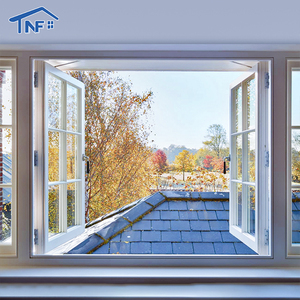
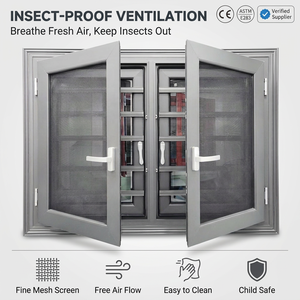
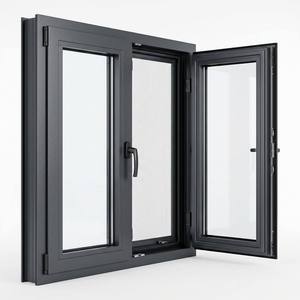
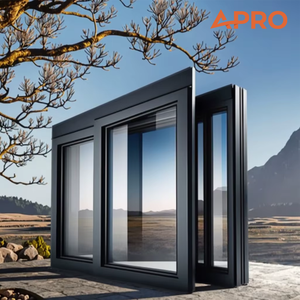
Architectural Slider
180,000 m²
Intelligent Production Facility
1,000,000+
Annual M² Capacity Output
100+
Patented Fenestration Designs
18,000+
Completed Global Projects
1. Sourcing Evolution: Why Aluminium Concertina Doors Dominate Modern Facades
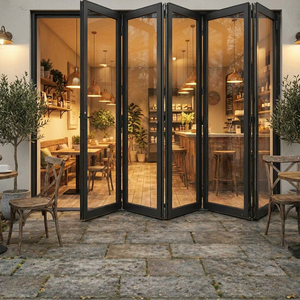
Aluminium concertina doors (bi-fold accordion assemblies) have evolved from purely residential patio transitions into mission-critical structural systems for upscale commercial spaces, hospitality resorts, and luxury real estate. As modern architectural design emphasizes uninterrupted sightlines and expansive indoor-outdoor living, procurement demands are shifting rapidly towards high-span, multi-leaf systems that do not compromise on thermal performance, structural deflection resistance, or perimeter air-water tightness.
In mature markets such as Australia, New Zealand, North America, and Western Europe, sourcing engineers are moving away from standard profile extrusions toward extruded 6063-T5 and 6063-T6 architectural aluminium featuring multi-chambered polyamide (PA66) thermal break barriers. China stands as the global hub for precision-extruded concertina assemblies, providing high volume capacity alongside advanced CNC zero-error fabrication lines that ensure sub-millimeter tolerances on track runs up to 14 meters in width.
2. Future Sourcing Trends: Smart Glazing, Energy Targets & Cyclonic Resilience
Procurement directors face increasing pressure under heightened sustainability and safety frameworks including the Australian National Construction Code (NCC 2022 / AS 2047), New Zealand Building Code (NZBC H1), and European Energy Performance of Buildings Directive (EPBD). Sourcing concertina systems over the next decade demands an understanding of three transformative supply chain trends:
A. Advanced Multi-Chamber Thermal Insulation: Standard single or dual-chamber thermal strips are giving way to triple-sealed, multi-cavity polyamides infused with aerogel or high-density foam filling. When paired with warm-edge insulated glass units (IGUs) with argon fill and soft-coat Low-E layers, system overall U-values drop to below 1.4 W/m²·K (U-factor < 0.25 in the US), allowing whole-wall glazed facades to satisfy strict commercial energy budgets.
B. Heavy-Load Bottom-Rolling Hardware & Heavy Leaf Capacity: Historic failure points in bi-fold systems centered on top-hung sag and guide roller fatigue. Leading Chinese manufacturers have engineered bottom-bearing stainless steel roller trucks capable of supporting leaf loads up to 400 kg per panel, allowing sash heights up to 4.5 meters without structural warping or operation binding.
C. Cyclonic & Hurricane-Rated Assemblies: High-wind oceanic zones require specialized structural mullion reinforcements, structural glazing silicone bonding, and multi-point perimeter compression seals. These configurations ensure certified compliance with AS 4055 wind categories up to C4/N6, and ASTM E1886/E1996 missile impact testing for coastal developments.
3. Concertina Technical Verification Matrix for Commercial Buyers
When issuing Requests for Quotation (RFQs) or verifying factory compliance, international buyers should audit candidate systems against the verified performance metrics below:
| Performance Parameter | Standard Configuration | High-Performance / Cyclonic Spec | Global Test Standard |
|---|---|---|---|
| Aluminium Alloy Profile | 6063-T5, Wall Thickness 2.0 mm | 6063-T6 / 6061-T6, Wall Thickness 2.5 mm – 3.0 mm | GB/T 5237, ASTM B221, EN 755 |
| Thermal Insulation | Standard 14.8 mm Polyamide Strip | 24 mm – 34 mm PA66 GF25 Isobar with Foam Fill | ISO 10077-2, NFRC 100/200 |
| Glazing Specification | 5mm + 12A + 5mm Double Toughened Low-E | 6mm + 16Ar + 6mm Triple Laminated SGP Glass | AS 1288, EN 12150, ASTM C1048 |
| Water Penetration | 300 Pa – 450 Pa | 700 Pa – 1000 Pa (Sub-sill with check valves) | AS 2047, ASTM E331, BS EN 12208 |
| Design Wind Pressure | Serviceability 1500 Pa / Ultimate 2500 Pa | Serviceability 3000 Pa / Ultimate 6000+ Pa | AS 4055, ASTM E330, EN 12210 |
| Security System | 3-Point Shootbolt Mechanism | Patented Four-Side Six-Point Anti-Theft Lock | PAS 24, RC2 / RC3 (EN 1627) |
4. Enterprise Competitive Edge: The Foshan Manufacturing Advantage
Export excellence is rooted in vertically integrated engineering control. Guangdong Dejiyoupin Doors and Windows Co., Ltd. (DERCHI) combines over 25 years of specialized door and window manufacturing with an advanced 180,000 m² smart factory infrastructure in Foshan, China. This industrial base houses automated extrusion cutting centers, computerized CNC corner-crimping cells, and integrated IGU tempering-laminating lines that output over 1,000,000 m² annually.
DERCHI mitigates cross-border procurement risk by delivering an international certification grand slam: AS 2047 (Australia), CE (Europe), NFRC (North America), CSA (Canada), Hurricane Impact Certification, and ISO 9001. Beyond component durability, our internal R&D department holds over 100 independent invention patents—including the proprietary Four-Side Six-Point locking assembly that solves long-standing perimeter gasket compression and anti-intrusion vulnerabilities inherent in multi-panel bi-fold doors.
Enterprise Solutions
Engineered Advantages for Commercial Specifiers
Standardizing global supply chain operations through robust structural design, direct engineering support, and audited logistics protection.
Patented 4-Side Multi-Point Lock
Equipped with DERCHI’s proprietary Four-Side Six-Point perimeter active locking system. Eliminates hinge-side sash separation and ensures complete gasket compression under severe negative wind load suction.
Thermally Broken Isobar Technology
Integrated continuous polyamide PA66 GF25 thermal breaks stop indoor-outdoor conductive heat loss. Mitigates condensation in humid marine and tropical coastal deployments, meeting rigorous commercial building energy codes.
Heavy-Load Stainless Steel Bearings
Industrial bottom-running gear utilizing precision quad-wheeled stainless steel ball bearings. Engineered for effortless, one-touch tactile operation across multi-panel spans exceeding 10 meters in width.
BIM & Full Shop Drawing Review
In-house team of 30+ senior fenestration engineers provides structural deflection calculations, BIM files, CAD elevation sections, and drainage schematics prior to production release.
Xinhua Certified "China Famous Brand"
Formally recognized for production consistency, high export volumes, and continuous innovation. DERCHI operates with complete supply chain transparency across raw billet sourcing to final crating.
Export-Grade Protective Packaging
Every frame assembly is covered with scratch-resistant film, heavy-duty corner guards, moisture desiccant, and steel-reinforced plywood crating to survive rough ocean transit intact.
Direct Clarifications
Frequently Asked Procurement Questions
Clear, technically precise answers addressing customs compliance, structural engineering, delivery timelines, and factory warranties.
Are your concertina doors fully compliant with Australian Standard AS 2047? +
Yes. Our aluminium bifold and concertina door systems are fully tested and certified to AS 2047, including structural deflection, air infiltration, water penetration resistance, and ultimate strength. Detailed NATA-accredited test reports and engineering certificates are supplied for local council and certifier approvals.
How do you guarantee weather tightness in exposed coastal or cyclonic locations? +
Coastal and high-wind environments require continuous EPDM weather gaskets, vulcanized corner joints, and integrated sub-sill drain trays equipped with one-way drainage valves. For designated hurricane regions, we deploy reinforced interlock mullions and laminated SGP impact glass.
What surface treatment options are available to prevent salt spray corrosion? +
We provide Qualicoat Class 2 architectural powder coating, PVDF (fluorocarbon) three-coat finishes, and high-micron architectural anodizing (20–25 microns). All options withstand accelerated 3,000+ hour acetic salt spray testing without blistering or pitting.
Can large commercial projects receive custom extrusion dies and hardware branding? +
Yes. With 30+ dedicated R&D engineers, we design and produce custom extrusion dies, specialized threshold solutions (including ADA-compliant zero-step flush tracks), and private-label hardware for developers, volume builders, and global architectural brands.
What are the standard production lead times and ocean shipping durations? +
Factory fabrication typically takes 25 to 35 calendar days following shop drawing sign-off and glass procurement. Ocean transit from Foshan / Shenzhen / Guangzhou ports takes 13 to 20 days to major Australian/NZ ports, and 20 to 30 days to North American and European destinations.
How does the factory resolve installation and dimensional discrepancies on site? +
To eliminate errors, we perform full pre-assembly and leveling checks in the factory prior to packing, providing high-resolution video proof. Every order includes indexed shop drawings, QR-coded panel tracking, 3D installation videos, and direct technical video support.
Engineered for Excellence. Specified for Your Market.
Consult with our senior fenestration engineers to receive architectural drawings, AS 2047 test certificates, and factory-direct pricing for your project schedule.
Get Catalog