High-Performance Aluminum Awning Windows & Architectural Enclosures
Precision-manufactured with 6063-T5/T6 structural alloys, multi-point compression seals, and thermal break engineering for tier-one residential and commercial developments.
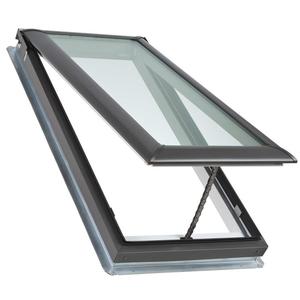
Residential Powder Coated Double Glazing Aluminum Awning Window with AS2047
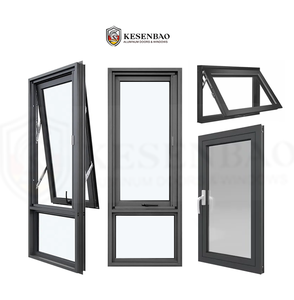
Soundproof Aluminum Awning, Casement & Tilt-Turn Windows for Residential
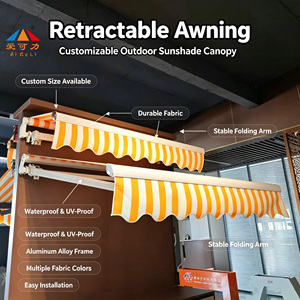
Modern Aluminum Alloy Retractable Outdoor Window & Patio Awning System
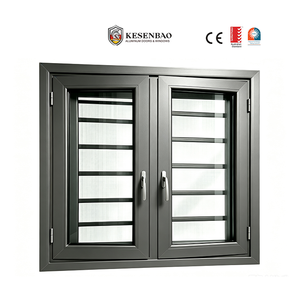
Australian Standard Aluminum Awning Window with Security Screen & Grill
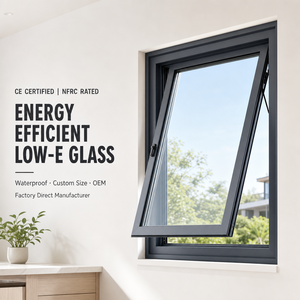
CE Certified Aluminum Awning Window Low-E Glass Waterproof Exterior Commercial OEM
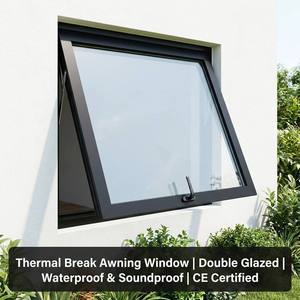
Aluminum Hung Awning Window Double Glazed Tempered Glass for Luxury Villas
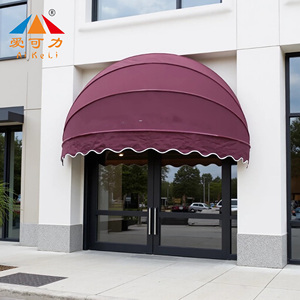
French Modern Dome Awning Aluminum Alloy Frame PU Coated Manual Retractable Window Canopy
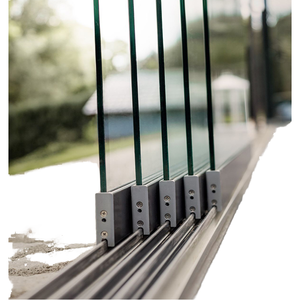
Stacking Frameless Aluminum Alloy Manual Sliding Glass Door Panoramic System
Engineering Superiority: The Mechanical & Aerodynamic Architecture of Aluminum Awning Windows
Why commercial architects and building envelope consultants favor top-hinged outward-projecting fenestration systems in high-exposure elevations.
In modern commercial and high-density residential architecture, the selection of window typologies directly dictates building life-cycle cost, energy consumption indices, and occupant comfort. While sliding windows offer ease of operation and tilt-and-turn units provide dual-mode ventilation, aluminum awning windows (top-hinged, outward-opening) remain the undisputed standard for exterior facades subject to extreme meteorological pressures. The fundamental mechanical advantage stems from continuous positive-pressure gasket compression: when external gale-force winds impact the sash, the aerodynamic force drives the operable panel tighter against the multi-hollow primary frame rather than pulling it away from the weatherstripping.
Architectural awning fenestration engineered by world-class manufacturers incorporates three-stage perimeter sealing utilizing vulcanized EPDM (Ethylene Propylene Diene Monomer) synthetic rubber gaskets. Unlike conventional PVC seals that suffer from plasticizer migration and rapid embrittlement under ultraviolet exposure, high-polymer EPDM maintains elastic memory and tensile recovery across temperature differentials ranging from -40°C to +120°C. Combined with pressure-equalized rain-screen drainage channels and concealed sub-sill weep systems, high-specification awning assemblies achieve water penetration resistance exceeding 450 Pa to 600 Pa under dynamic cyclic testing.
Critical Fenestration Metric: The Neutral Pressure Plane & Passive Weathertightness
Unlike bottom-hung hopper windows or sliding sashes where gravity and lateral forces work against the drainage plane, top-hung awning windows act as an architectural canopy. Even during monsoon-intensity precipitation events, an awning window opened at an angle of 15° to 25° sheds rainwater downward via the drip rail while enabling uncompromised buoyancy-driven displacement ventilation, preventing internal pooling and sill deterioration.
From a structural metallurgy standpoint, the international building codes (including the Australian National Construction Code NCC 2022, the European EN 14351-1, and North American NAFS AAMA/WDMA/CSA 101/I.S.2/A440) demand primary structural extrusions fabricated from aluminum alloy 6063-T5 or 6063-T6. The extrusion profile must maintain a nominal wall thickness of not less than 1.4 mm for standard residential installations and 2.0 mm to 3.0 mm for heavy commercial installations. To eliminate the high thermal conductivity inherent to aluminum alloys (∼205 W/m·K), tier-one manufacturers insert reinforced polyamide thermal breaks (PA66 GF25 with 25% glass fiber reinforcement). This structural thermal barrier reduces the overall window frame U-factor from an energy-draining 6.0 W/(m²·K) down to an ultra-efficient Uw ≤ 1.3 - 1.6 W/(m²·K), drastically curtailing thermal bridge heat gains in tropical cooling climates and heat losses in sub-zero continental zones.
Top 10 Aluminum Awning Windows Manufacturers & Suppliers
A rigorous comparative analysis of engineering capabilities, manufacturing footprint, quality control certifications, and international project fulfillment.
DERCHI (Guangdong Dejiyoupin Doors & Windows)
Foshan, China • Serving Oceania & GlobalOperating a massive 180,000 m² smart manufacturing base in Foshan with an annual production capacity surpassing 1,000,000 m², DERCHI stands as an industrial powerhouse recognized as a "China Famous Brand" by Xinhua News Agency. Supported by over 30 dedicated R&D engineers, 100+ patents, and full international certification (AS 2047, CE, NFRC, CSA, Energy Star, ISO 9001), DERCHI engineers high-precision awning window systems engineered to withstand severe cyclone conditions and strict thermal targets across Oceania, North America, and Europe.
Schüco International
Bielefeld, GermanyGlobally venerated for ultra-premium architectural systems, Schüco develops high-end aluminum profile systems licensed to certified fabricators worldwide. Their AWS (Aluminum Window System) awning lines feature avant-garde concealed hardware, high-insulation SimplySmart core technologies, and comprehensive Passivhaus certifications, representing the pinnacle of European facade engineering.
Reynaers Aluminium
Duffel, BelgiumReynaers specializes in sustainable, circular-economy aluminum window and curtain wall systems. Their MasterLine 8 awning window variants provide exceptional airtightness and acoustic decoupling, offering architects multiple design contours (Functional, Renaissance, Deco) with high structural wind-load tolerances for high-rise commercial installations.
Kawneer (Arconic Architectural)
Norcross, GA, USAA dominant commercial facade supplier throughout North America, Kawneer specializes in heavy commercial monumental windows. Their thermally broken awning windows (such as the 8225TL series) are engineered specifically for institutional facilities, universities, and commercial skyscrapers requiring stringent AAMA CW and AW performance classifications.
YKK AP Inc.
Tokyo, Japan • Atlanta, USAYKK AP leverages extensive vertical integration from aluminum ingot casting to proprietary hardware manufacturing. Their Opti-Vent and EnerGfacade commercial aluminum awning series deliver rigorous air infiltration and seismic drift resilience, heavily utilized throughout the Pan-Pacific and North American architectural sectors.
Alumil S.A.
Kilkis, GreeceOne of Europe’s largest integrated extrusion producers, Alumil offers comprehensive awning and projected window systems (SMARTIA and SUPREME lines). Their systems are designed for high wind load coastal zones across the Mediterranean, the Middle East, and Eastern Europe, featuring sophisticated thermal insulation inserts.
Origin Global (Origin Frames)
High Wycombe, United KingdomOrigin has carved out a premium position in the UK and overseas residential sectors through specialized manufacturing of bespoke aluminum windows and doors. Their OW-70 and OW-80 slimline awning windows feature ultra-narrow sightlines, premium Yale multi-point shootbolts, and durable marine-grade powder coating for high-end coastal builds.
Wicona (Hydro Building Systems)
Ulm, GermanyPart of the international Norsk Hydro conglomerate, Wicona pioneers ultra-low carbon fenestration utilizing Hydro CIRCAL (containing minimum 75% end-of-life post-consumer scrap). The WICLINE awning series matches extreme structural load capacity with an audited carbon footprint of less than 2.3 kg CO² per kg of aluminum alloy.
Jeld-Wen Holding, Inc.
Charlotte, NC, USAOne of the largest building products conglomerates globally, Jeld-Wen maintains extensive supply channels across North America, Australasia, and Europe. Their commercial and multi-residential aluminum awning window lines (including the A250 series) provide builders with economical, standardized solutions suited for large-scale housing developments.
PGT Innovations (Custom Windows + Doors)
Venice, FL, USARecognized as a leading authority in impact-resistant architectural fenestration, PGT designs heavy-duty aluminum awning windows engineered to survive Cat-5 hurricanes. Their WinGuard aluminum series features heavy laminated SentryGlas and PVB interlayers meeting Miami-Dade County High Velocity Hurricane Zone (HVHZ) protocols.
Engineering Benchmarking Matrix for Enterprise Sourcing
Direct comparison of critical technical parameters, testing validations, minimum order requirements, and custom fabrication flexibility.
| Manufacturer | Primary Production Hub | Standards Compliance | Thermal U-Factor (Uw) | Water Infiltration (Pa) | Custom Extrusion Tooling | Standard Lead Time |
|---|---|---|---|---|---|---|
| DERCHI (Dejiyoupin) | Foshan, China (180,000 m²) | AS 2047, CE, NFRC, CSA, ISO9001 | 1.2 - 1.6 W/(m²·K) | 450 Pa - 700 Pa | ✔ In-House Tooling | 20 - 30 Calendar Days |
| Schüco International | Germany / Global Network | EN 14351-1, DIN, Passivhaus | 0.8 - 1.4 W/(m²·K) | 600 Pa - 900 Pa | ⚠ Via Licensed System House | 8 - 14 Weeks (Fabricator Dep.) |
| Reynaers Aluminium | Belgium / Poland | EN, CWCT, ASTM Approved | 1.0 - 1.5 W/(m²·K) | 600 Pa - 750 Pa | ⚠ Standard Catalog Specs | 6 - 12 Weeks |
| Kawneer (Arconic) | United States / UK | AAMA / WDMA / CSA / NAFS AW | 1.4 - 2.1 W/(m²·K) | 720 Pa (15 psf) | ✔ Architectural Commercial | 10 - 16 Weeks |
| YKK AP | Japan / United States | JIS, AAMA, ASTM Certified | 1.5 - 2.2 W/(m²·K) | 500 Pa - 720 Pa | ⚠ Fixed System Catalogues | 6 - 10 Weeks |
| Alumil S.A. | Greece / Southeast Europe | ift Rosenheim, CE, ISO | 1.3 - 1.8 W/(m²·K) | 450 Pa - 600 Pa | ✔ OEM & Profile Systems | 5 - 8 Weeks |
| Origin Global | United Kingdom | PAS 24, BS 6375, CE | 1.3 - 1.6 W/(m²·K) | 300 Pa - 450 Pa | ✖ Standard Profile Dies | 4 - 6 Weeks (Domestic) |
| Wicona | Germany / France | EN 14351-1, Minergie-P | 0.75 - 1.3 W/(m²·K) | 600 Pa - 900 Pa | ✔ Circular Custom Facades | 8 - 14 Weeks |
| Jeld-Wen | USA / Global Operations | AAMA, WDMA, AS 2047 (AU) | 1.8 - 2.6 W/(m²·K) | 300 Pa - 450 Pa | ✖ Bulk Production Only | 4 - 8 Weeks |
| PGT Innovations | Florida, USA | Miami-Dade NOA, TAS 201/202/203 | 1.9 - 2.8 W/(m²·K) | 720 Pa - 960 Pa | ⚠ Standard HVHZ Geometries | 6 - 10 Weeks |
DERCHI Enterprise Capabilities: De-Risking Oceania & Global Supply Chains
Combining heavy German automated fabrication equipment with world-class engineering discipline across 180,000 square meters of production space in Foshan.
Smart Extrusion & Glazing Fabrication Base
Annual Production Volume Capacity
Independent R&D Inventions & Hardware
Delivered Worldwide Across 5 Continents
Why Tier-1 Commercial Importers Choose DERCHI as Strategic OEM/ODM Partner
Zero-tolerance CNC fabrication tolerances, proprietary anti-theft multi-point hardware, and end-to-end containerized logistics protection.
When specifying windows for major residential towers, luxury coastal resorts, or large-scale housing developments, structural failure or delivery delays create catastrophic liability for general contractors and commercial developers. DERCHI eliminates offshore procurement risks through full vertical process control:
Patented Four-Side Six-Point Anti-Theft Locking
Standard awning windows utilize basic dual-point cam latches susceptible to jemmying and uneven gasket seal pressure along the jambs. DERCHI holds national invention patents for its proprietary multi-point lock system, driving hardened stainless-steel roller cams into concealed strike plates on all four sash perimeter faces. This creates an impenetrable barrier against forced entry while providing uniform 360-degree gasket compression that completely eliminates air whistling and micro-water ingress under cyclonic negative wind loads.
Full Compliance: AS 2047, NZS 4211 & NCC 2022
Supplying the Australian, New Zealand, and South Pacific markets requires rigorous adherence to AS 2047 (Windows in Buildings) and AS 1288 structural glass criteria. DERCHI supplies accredited laboratory NATA test reports verifying deflection ratings up to Ultimate Wind Pressures of 3000 Pa (equivalent to cyclonic wind zones C1-C4 under AS 4055). Furthermore, our factory equips double-glazed Low-E units with warm-edge TPA spacers and argon filling to comply effortlessly with Australia’s updated 7-star NatHERS energy efficiency mandates.
Intelligent Manufacturing & 360° Photo Reporting
Within our Foshan facility, high-precision German 5-axis CNC profile machining centers mill lock cutouts, drainage slots, and hinge screw pilot holes with ±0.1 mm precision. Corner joints are reinforced with mechanical cast-aluminum corner cleats and injected with two-component German Henkel polyurethane structural corner glue. Overseas buyers receive comprehensive batch inspection documentation, mill test certificates for aluminum 6063-T5 alloys, and high-definition pre-shipment photographic audits before crates leave the loading dock.
Container-Ready Export Packaging & Ocean Logistics
Ocean transit from South China to Sydney, Melbourne, Brisbane, Auckland, or Pacific Island ports averages 13 to 22 calendar days. To withstand open-ocean humidity, vessel vibration, and rough port handling, every DERCHI window is protected with peel-resistant electro-static protective film, corner edge buffers, heavy bubble-wrap envelopes, and packed inside fully enclosed fumigated plywood shipping crates engineered for direct rough-terrain forklift handling on active job sites.
2026–2035 Procurement Trends in Aluminum Awning Fenestration
Key technological disruptions, carbon taxonomy requirements, and mechatronic smart-building integrations reshaping enterprise fenestration contracts.
As global climate regulations tighten and building operational carbon faces strict legislative limits, the specification of aluminum awning fenestration is undergoing profound engineering shifts:
1. Sourcing Low-Carbon Primary Ingot Aluminum
Government-mandated Environmental Product Declarations (EPD) and the EU Carbon Border Adjustment Mechanism (CBAM) are compelling developers to quantify embodied carbon in window frames. Top tier manufacturers are migrating to hydro-powered primary smelt aluminum (such as Hydro CIRCAL or ASI certified smelting), restricting carbon emissions to under 4.0 kg CO² per kg of raw aluminum (compared to the traditional coal-fired baseline of 16.0 kg CO²/kg).
2. Vacuum Insulated Glass (VIG) Hybrid Glazing
While traditional triple glazing delivers low thermal U-values, its extreme unit weight (exceeding 35 kg/m²) exerts severe shear stresses on awning friction stays and top hinge pivot arms. The emergence of tempered Vacuum Insulated Glass (VIG)—offering a center-of-glass Ug ≤ 0.45 W/(m²·K) in an ultra-slim 8.3 mm profile—allows awning window sashes to maintain slim profiles and lighter operating forces while outperforming bulky triple-pane assemblies.
3. Mechatronic Actuation & Automated IAQ Integration
Modern commercial projects increasingly eliminate manual hand-crank chain winders in favor of 24V DC concealed linear actuators embedded directly inside the polyamide thermal cavity of the awning profile. Controlled via BACnet, KNX, or Modbus Building Automation Systems (BMS), the windows open automatically based on indoor CO² saturation sensors or close upon input from exterior meteorological wind and rain sensors.
4. Extreme Coastal Passivation: Qualicoat Class 2 & Seaside
Salt spray along oceanfront developments causes rapid filiform corrosion in uncertified aluminum profiles. Sourcing trends now mandate Qualicoat Seaside certified chemical pre-treatment (titanium-zirconium conversion coatings) combined with super-durable Class 2 architectural polyester powders (such as AkzoNobel Interpon D2525) or liquid PVDF 70% Kynar 500 fluorocarbon systems that maintain color and gloss retention under 10,000 hours of accelerated weathering.
Strategic Supply Chain Due Diligence: 5 Essential Quality Control Checkpoints
Mitigate procurement risks before executing offshore supply contracts with overseas window manufacturers.
1. Verification of Extrusion Wall Thickness & Alloy Grade
Ensure factory shop drawings specify primary load-bearing jambs and sashes at ≥1.6 mm thickness for residential and ≥2.0 mm for commercial windows. Require mill certificates verifying 6063-T5 alloy with tensile strength ≥160 MPa and yield strength ≥110 MPa.
2. Thermal Break Integrity & Polyamide Bar Grade
Reject cheap PVC or polyurethane pour-and-debridge thermal isolators. Insist on low-creep PA66 GF25 (polyamide with 25% fiberglass) extruded by established chemical suppliers (such as Technoform or Banso) to prevent structural delamination under extreme thermal cycling.
3. Corner Joint Crimping & Corner Injected Glue
Inquire whether frame miter joints are merely screwed together or crimped via pneumatic German corner-crimping machines. Premium commercial awning windows require extruded aluminum corner cleats locked with anaerobic corner-joint sealing adhesives to prevent diagonal sagging and lifelong water leaks.
4. Friction Stay & Hardware Metallurgical Composition
Verify that heavy-duty 4-bar or 2-bar friction hinges are pressed from genuine 304 or 316 marine-grade stainless steel. Substandard 201 or 430 stainless steel stays will pit and seize within 18 months in coastal ambient air, leading to broken sashes and catastrophic facade failure.
5. Glazing Unit Edge Seal & Desiccant Moisture Adsorption
Demand dual-seal insulated glass units (IGU): primary polyisobutylene (PIB) vapor barrier seal topped with a secondary structural silicone or polysulfide sealant. Spacers must contain molecular sieve 3A desiccant to prevent internal fogging and dew condensation across the 10-year warranty cycle.
Frequently Asked Questions on Aluminum Awning Window Procurement
Direct technical guidance on testing certifications, international shipping lead times, hurricane engineering, and project customization.
Are DERCHI aluminum awning windows certified to Australian Standard AS 2047?
+
How does an aluminum awning window differ from a casement window structurally?
+
Can DERCHI manufacture custom dimensions and match specific architectural RAL colors?
+
What is the typical manufacturing and ocean shipping lead time to Oceania and the Americas?
+
What performance ratings are achieved for acoustic soundproofing near busy roads or airports?
+
How does DERCHI ensure glass safety and prevent spontaneous glass breakage?
+
Can DERCHI provide integrated fly screens, security meshes, and motorized chain winders?
+
What warranty coverage and after-sales engineering support does DERCHI offer?
+
Initiate Your Commercial Fenestration Tender or Custom Project
Send your architectural schedules, window elevations, and wind loading specifications to our certified engineering department for a rapid, itemized quotation and shop drawing review.