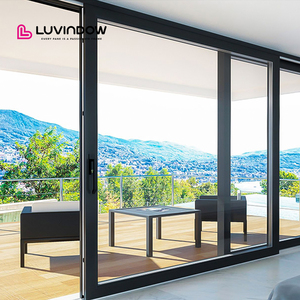
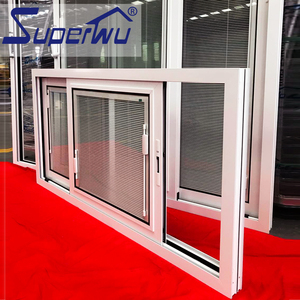
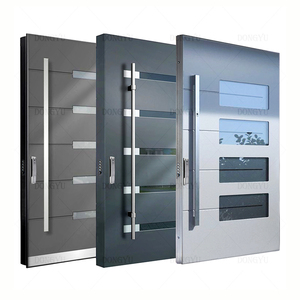
Featured Commercial & Residential Storm Door Enclosures
Excellence in impact resistance, structural deflection resistance, and custom fenestration profiles compliant with AS 2047, NFRC, and CE testing protocols.
180,000 m²
Modern Production Base
1,000,000+ m²
Annual Extrusion Capacity
100+
Patented Technologies
18,000+
Global Projects Delivered
Architectural Specification Guide: Selecting the Right Aluminum Storm Door Systems
Modern building envelopes demand an unprecedented synthesis of structural durability, continuous atmospheric sealing, and refined minimalist aesthetics. When specifying aluminum storm doors for high-exposure environments—including cyclonic zones, severe maritime belts, and regions prone to sub-zero thermal cycling—procurement managers cannot rely solely on standard fenestration metrics. The selection process must evaluate alloy composition, metallurgical tempering, inter-chamber thermal isolators, glass-edge thermal boundary integrity, and hardware shear stress tolerances.
1. Primary Structural Metallurgy & Profile Integrity
Standard architectural fenestration often relies on commercial 6063-T5 aluminum extrusions. While sufficient for interior applications, OEM/ODM storm systems exposed to repetitive dynamic wind pressures require a minimum alloy threshold of 6063-T6 or structural 6061-T6 aluminum alloys. High-load profiles feature nominal wall thicknesses ranging from 2.0mm to 3.5mm, accompanied by reinforced multi-cavity internal webbing. This structural cross-section prevents lateral deflection and localized web-crippling during sustained cyclonic loading, preserving operational plumb and weatherstrip compression under severe negative wind load scenarios.
2. Impact-Resistant Structural Glazing Architectures
To resist cyclic wind loading and missile impacts common in sub-tropical and coastal corridors, the glass unit must be treated as a structural diaphragm. Standard double-pane units are swapped for laminated insulating glass units (IGUs) incorporating polyvinyl butyral (PVB) or high-modulus SentryGlas (SGP) ionoplast interlayers. Under direct kinetic impact, the outer sacrificial glass sheet may fracture, but the composite structural interlayer remains intact, retaining structural chamber pressure and preventing atmospheric wind and water ingress from destabilizing the building envelope.
Patented Multi-Point Locking
Featuring our proprietary Four-Side Six-Point locking mechanics, reinforcing the door sash into deep interlocking frame pockets to resist high mechanical pry forces and seismic warping.
Continuous Polyamide Thermal Breaks
PA66 GF25 fiberglass-reinforced thermal barriers eliminate thermal conduction bridging, dramatically cutting condensation risks in climates with extreme indoor-outdoor temperature differentials.
Fluoropolymer & Marine-Grade Coatings
AAMA 2605 compliant PVDF fluorocarbon coatings and 25-micron architectural anodizing, rigorously salt-spray tested to surpass 3,000 hours of continuous coastal saline mist exposure.
Engineering Benchmark Matrix: Commercial Aluminum Storm Enclosures
The table below provides a verified comparative analysis of material grades, thermal parameters, and structural capabilities critical for engineering consultants and procurement leads reviewing architectural specifications:
| Performance Parameter | Standard Commercial Grade | DERCHI Heavy-Duty Coastal Storm | DERCHI Ultra-Performance Cyclonic |
|---|---|---|---|
| Alloy & Temper | 6063-T5 (1.4mm - 1.6mm) | 6063-T6 Architectural (2.0mm - 2.5mm) | 6061/6063-T6 Heavy Alloy (3.0mm+) |
| Air Infiltration (ASTM E283) | < 0.30 cfm/ft² | ≤ 0.10 cfm/ft² (AS 2047 Certified) | ≤ 0.05 cfm/ft² (Hermetic Level) |
| Water Penetration (ASTM E331) | 300 Pa (Static Head) | 600 Pa to 750 Pa Continuous | 1000 Pa (Dynamic Pulsating Pressure) |
| Structural Design Load (DP Rating) | DP30 - DP40 | DP65 - DP80 (Standard Coastal) | DP100+ (High Velocity Hurricane Zone) |
| Thermal Transmittance (U-Factor) | 2.8 - 3.2 W/m²·K | 1.4 - 1.8 W/m²·K (Argon + Low-E) | ≤ 1.0 W/m²·K (Triple Insulated + Warm Edge) |
| Locking Security Protocol | Single/Dual Point Latch | 3-Point Integrated Mortise | Patented 4-Side 6-Point Perimeter Lock |
Future Procurement Trends in Architectural Storm Doors (2025–2030)
The global facade and fenestration industry is undergoing structural transformations spurred by climate-resilient building codes, municipal decarbonization mandates, and digitized supply chains. B2B procurement directors and developers must anticipate several systemic industry shifts:
Decarbonization, Low-Carbon Aluminum, and Circularity
Embodied carbon calculations are moving from voluntary ESG reporting to mandatory regulatory compliance across North America, Europe, and Australasia. Forward-thinking manufacturers are phasing out traditional coal-smelted primary ingots in favor of green-hydro-powered smelting and closed-loop post-industrial scrap recycling. DERCHI integrates certified low-carbon billet stock that limits carbon intensity under 4.0 kg CO₂ per kg of extruded profile, enabling developers to capture optimal LEED v4.1 and Green Star credits across commercial developments.
Ultra-Slim Sightlines Paired with Extreme Structural Loading
Architectural demand is moving rapidly toward continuous floor-to-ceiling glass expanses that maximize indoor-outdoor connectivity without bulky framing members. This aesthetic priority presents an engineering paradox when paired with severe storm resistance. Overcoming this requires advanced structural glazing silicones, concealed internal steel-reinforcement tie-rods, and specialized cast-aluminum corner keys, achieving frame sightlines under 45mm while sustaining cyclic structural wind pressures exceeding 4,500 Pascals.
Integration of Smart Access and Invisible Building Automation
The convergence of building envelope resilience with Internet of Things (IoT) infrastructure has reached commercial storm systems. OEM procurement workflows increasingly demand factory-integrated low-voltage raceways, concealed door position sensors (DPS), motorized multipoint retractors, and micro-actuators that communicate with central Building Management Systems (BMS). DERCHI supplies specialized internal CNC channel profiling to support concealed biometric units, electro-magnetic locks, and automated atmospheric seal deployers with zero compromises to thermal or acoustic perimeter seals.
Enterprise Manufacturing Dominance: Why Partner with DERCHI
With an established 180,000 m² modern manufacturing ecosystem headquartered in the industrial heartland of Foshan, Guangdong Dejiyoupin Doors and Windows Co., Ltd. (DERCHI) stands among China's elite Top 10 door and window manufacturers. For over 25 continuous years, DERCHI has bridged precision fabrication with cross-border engineering governance, servicing elite builders, developers, and distributors across Oceania, North America, Europe, and the Middle East.
Zero-Error Intelligent Lines
Equipped with computerized high-precision dual-head cutting centers, multi-axis automated CNC milling, and robotic assembly cells ensuring dimensional tolerances within ±0.5mm across extended production batches.
The International "Grand Slam"
Full testing and compliance certifications covering Australian AS 2047 & AS 1288, North American NFRC & CSA standards, European CE conformity, and stringent ISO 9001 quality management oversight.
Container-Ready Secure Export
Every sash and frame receives peelable protective film, corner edge absorption armor, and moisture-barrier shrink wrap, secured in non-fumigation reinforced timber crates tailored for oceanic container transit.
From initial shop drawing conversions (CAD/BIM) and wind load structural calculations through sample prototyping, production runs, and on-site remote installation guidance, DERCHI functions not merely as a component vendor, but as a dedicated end-to-end technical subcontractor for your high-value fenestration assets.
Frequently Asked Questions: Global OEM/ODM Aluminum Storm Door Procurement
Direct technical responses addressing common engineering parameters, logistics protocols, custom tooling runs, and compliance standards for foreign buyers and specifiers:
What specific structural parameters verify an aluminum door as true "Storm/Hurricane Rated"?
A verified storm or hurricane-rated door must carry certified third-party testing reports confirming static water pressure containment (ASTM E331 or AS 2047 water penetration test above 450-700 Pa), cyclic wind pressure loading (ASTM E1886/E1996 or AS 4055 cyclonic ratings), and large missile kinetic impact resistance. These structural thresholds require a minimum profile wall thickness of 2.0mm to 3.0mm, structural composite glazing with SGP or thick PVB interlayers, heavy-duty stainless steel anchor plates, and multi-point deadbolts that anchor the sash directly into the building's rough structural frame.
How does DERCHI manage custom extrusion tooling (OEM/ODM) for proprietary architectural designs?
Our ODM process begins with a technical CAD/BIM drawing review and structural deflection analysis. We produce precision die tooling in-house within 15 to 20 working days. First-article die sample extrusions undergo rigorous metallurgical analysis, optical dimensional checks, tensile strain testing, and finish adhesion verification. Once initial samples are approved by the client's engineering team, our manufacturing base can supply full-scale volume runs backed by an annual production capability surpassing 1,000,000 square meters.
What measures prevent galvanic and coastal corrosion on storm doors deployed in high-salinity marine belts?
Coastal environments demand holistic corrosion abatement. DERCHI profiles are pre-treated through acid etching and chrome-free conversion baths before applying AkzoNobel or PPG architectural powder coatings (meeting AAMA 2604/2605 specs) or 25-micron hard-anodizing layers. Furthermore, all assembly fasteners, hinges, rollers, and lock mechanisms are manufactured strictly from 316-grade marine stainless steel. Non-conductive EPDM isolating shims are installed wherever aluminum interfaces with steel structural subframes to prevent galvanic electrical potential exchange.
How are oversized storm sliding and folding units packed to eliminate container shipping damage?
Fenestration exports face severe maritime vibrations, thermal condensation, and dynamic shocks during oceanic transport. DERCHI utilizes a five-tier export packaging matrix: (1) low-tack protective polymer film applied directly to metal and glass surfaces; (2) shock-absorbing high-density polyethylene (HDPE) corner guards; (3) multi-layer air-bubble thermal wrap; (4) waterproof plastic encapsulation; and (5) custom heavy-duty, fully enclosed plywood crates built with internal stabilizing timber dunnage. Every crate is designed with balanced forklift slots and weight distribution centers for secure container staging.
Can DERCHI engineer doors to achieve specific energy ratings (NCC 2022, NZBC H1, Title 24, Energy Star)?
Yes. Modern energy codes mandate exceptionally low overall U-factors and strict Solar Heat Gain Coefficients (SHGC). We calculate and configure custom glass build-ups combining double or triple insulating glass units, high-performance soft-coat Low-E layers, 90%+ pure argon gas chamber filling, and warm-edge composite spacer bars. When paired with our high-modulus PA66 GF25 thermal break chambers, our storm door assemblies comfortably hit overall U-factors down to 1.2–1.6 W/m²·K (0.21–0.28 BTU/hr·ft²·°F), satisfying tightened regional thermal regulations globally.
What is the typical production lead time for full container load (FCL) OEM storm door orders?
Standard OEM production schedules for container orders range from 30 to 40 days following final sign-off of shop drawings and deposit verification. Custom profile die design and extrusion sampling typically adds 15 to 20 days to the front end of the initial production run. Fast-track scheduling is available for ongoing developer contracts and recurring distributor inventory replenish models.
Ready to Scale Your Architectural Fenestration Supply Chain?
Connect directly with our engineering division in Foshan. Submit your project schedules, opening sizes, wind loading specs, or custom OEM profile drawings for an expedited technical review and competitive factory-direct estimate.
Get a Quote