Acoustic STC 42
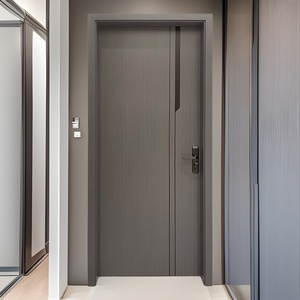
Acoustic Interior Systems
Manufactured in our 180,000 m² smart production hub using 6063-T5/T6 aviation-grade aluminum alloys, multi-point anti-theft locking architecture, and hyper-durable electrostatic coatings engineered for Oceania, North America, and European specifications.
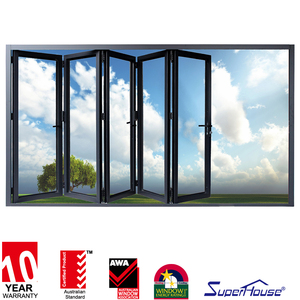
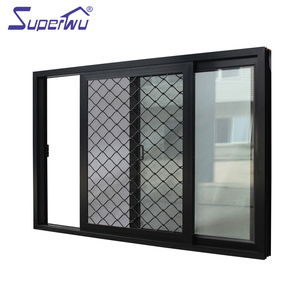
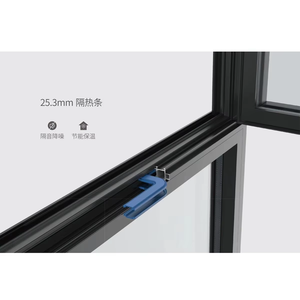
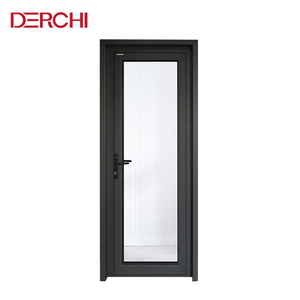
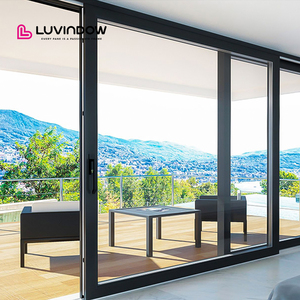
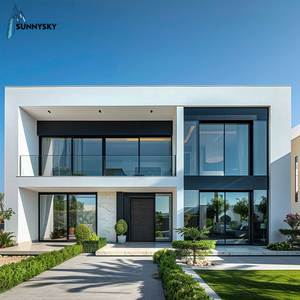
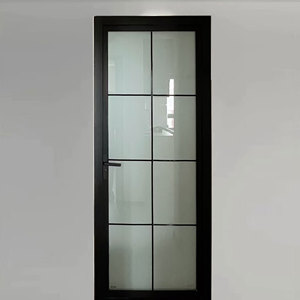
An authoritative technical evaluation of metallurgy, thermal performance, black surface treatment standards, and structural deflection compliance for OEM/ODM fenestration procurement.
In the manufacture of architectural exterior doors—specifically high-aspect-ratio black sliding systems and heavy-duty bi-fold units—the mechanical threshold of the aluminium profile dictates system life under extreme dynamic wind loads. Our OEM/ODM production lines strictly mandate virgin 6063-T6 or 6060-T6 billets, completely rejecting secondary remelt scrap that introduces microscopic iron impurities. Virgin billets ensure an ultimate tensile strength exceeding 205 MPa and yield strength beyond 170 MPa, satisfying structural deflection limits under AS 2047, ASTM E330, and EN 12211.
Extrusion wall thickness is maintained between 2.0 mm and 3.5 mm for structural load-bearing mullions and sliding sash profiles. This mass stabilizes the door frame against the thermal bowing phenomenon—a critical engineering vulnerability when black surface finishes absorb extreme solar radiation (reaching surface temperatures up to 80°C) while the conditioned interior remains at 21°C.
| Performance Characteristic | Commercial Grade Baseline | DERCHI OEM/ODM Architectural Standard | Compliance Test Benchmark |
|---|---|---|---|
| Aluminium Alloy & Temper | Recycled 6063-T5 (1.4–1.6mm) | Primary Virgin 6063-T6 / 6061-T6 (2.0–3.5mm) | ASTM B221 / AS/NZS 1866 |
| Black Surface Treatment | Standard Polyester Powder (40–50 μm) | Fluorocarbon PVDF / Qualicoat Class 2 Super-Durable (≥75 μm) | AAMA 2605 / Qualicoat Class 2 |
| Thermal Barrier Technology | Poured & Debridged Polyurethane | Technoform Polyamide PA66-GF25 Multi-Chamber Isolator | DIN 4108-4 / EN ISO 10077-2 |
| Glazing Integration | Single or Generic 5+9A+5 Double | Argon-Filled Low-E Laminated (e.g. 6LowE+12Ar+6mm Toughened) | AS 1288 / ASTM C1036 / EN 1279 |
| Acoustic Attenuation (Rw / STC) | Rw 28–30 dB | Rw 40–44 dB (Acoustic Interlayer PVB / SentryGlas) | ISO 10140-2 / ASTM E90 |
| Wind Pressure Resistance (Ultimate) | 1500 Pa to 2000 Pa | Up to 4500 Pa (Serviceability) / 6000 Pa (Ultimate Cyclonic) | AS 2047 / AS 4055 / ASTM E330 |
| Security & Hardware | Single-Point Mortise Latch | Four-Side Six-Point Anti-Theft Lock (Patented Design) | PAS 24 / AS 5039 / EN 1627 RC3 |
Architectural black finishes—including RAL 9005 Jet Black, Anodic Matt Black, and Fine Texture Noir—are among the most specified exterior colorways in contemporary commercial and residential developments. However, black finishes present severe solar absorbance challenges ($a \ge 0.92$), transforming the outer aluminum section into a high-heat sink. Inferior coatings degrade rapidly under UV exposure, resulting in chalking, fading ($\Delta E > 5.0$), and thermal stress fractures along profile joints.
To eliminate these risks, our OEM/ODM black doors utilize exclusively Qualicoat Class 2 certified super-durable powders or 70% Kynar 500 / Hylar 5000 PVDF fluoropolymer systems meeting AAMA 2605 criteria. Applied inside automated GEMA horizontal and vertical coating lines with computerized pre-treatment baths (zirconium nanotech passivation), our matte black finishes endure over 4,000 hours of continuous accelerated QUV-A testing and 10 years of South Florida outdoor weathering without perceptible gloss retention loss or micro-cracking.
Reinforced with 25% transverse glass fiber, our thermal breaks decouple interior and exterior frames. This prevents heat conduction, lowers U-values to $U_w \le 1.1\ \text{W/m}^2\text{K}$, and mitigates bimetallic bending stresses.
DERCHI's proprietary patented hardware locks all four perimeter sides simultaneously into hardened steel keeps. This design resists pry-bar attacks, exceeds RC3 / PAS 24 burglar-resistance ratings, and ensures an air-tight weather seal.
Continuous co-extruded cellular EPDM vulcanized gaskets maintain elastomeric memory down to -40°C. This guarantees water penetration resistance exceeding 600 Pa without degradation under coastal UV environments.
Ranked among China's Top 10 door and window manufacturers and honored as a "China Famous Brand" by Xinhua News Agency, Guangdong Dejiyoupin Doors and Windows Co., Ltd. delivers institutional-grade supply security to international fenestration buyers.
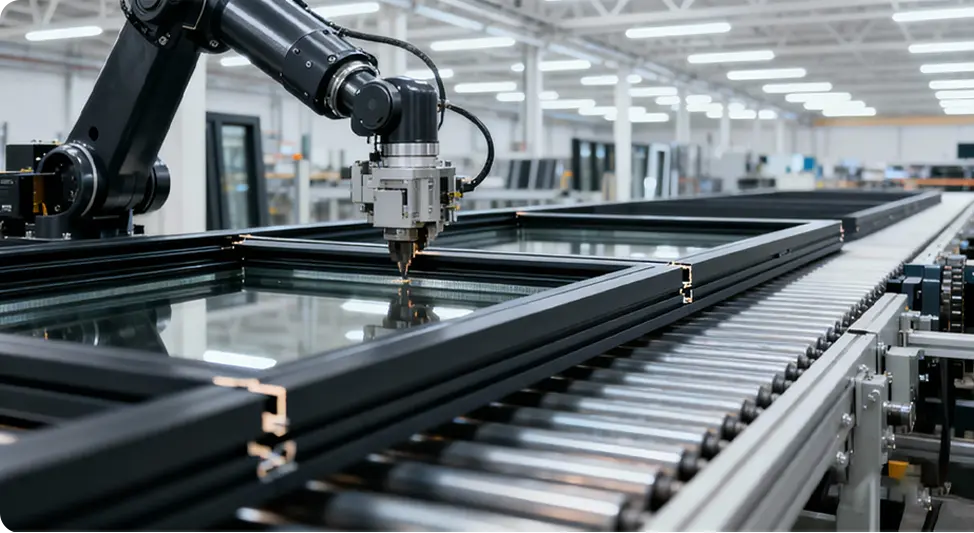
Our OEM/ODM manufacturing facility integrates digital cutting centers, CNC 4-axis profile machining, robotic corner crimping, and automated silicone dispensing. By eliminating manual tolerance stack-up, every black door assembly satisfies miter clearances under 0.1 mm and diagonals within ±0.5 mm across spans up to 6 meters.
Market dynamics, strict building regulations, and evolving architectural demands require institutional procurement teams to look beyond raw unit prices toward lifecycle value and technical compliance.
Architects are demanding structural frames with visible interlocks under 20 mm. Modern OEM black sliding systems utilize concealed bottom tracks recessed flush into finished interior flooring, coupled with cascading sub-sill drainage gutters capable of evacuating storm surges in excess of 150 liters/hr per linear meter.
Tier-1 commercial contracts now mandate Environmental Product Declarations (EPDs). The market is moving aggressively toward aluminum extruded using renewable hydroelectric power, keeping embodied carbon under 4.0 kg CO2e/kg Al. Our factory offers certified low-carbon billet sourcing for LEED and Green Star compliance.
OEM doors increasingly integrate flush biometric locks, 24V DC brushless concealed servo motors, and automated integration with KNX/Zigbee building automation. Concealed power loops inside profile hinges allow seamless smart-home operation without external conduit runs.
National building regulations (such as Australia's NCC 2022 7-star requirements and New Zealand's revised NZBC Clause H1) demand whole-assembly U-values below $U_w 1.5$. Non-thermally broken black aluminum profiles are obsolete in exterior envelopes; multi-cavity thermal break extrusions are now mandatory.
Global developers prioritize suppliers providing fully parameterized Revit and IFC family files during design phases. We deliver LOD 350 BIM models, structural anchor calculations, and full shop drawings with every quotation, eliminating jobsite coordination clashes.
Coastal resorts and island developments throughout the Pacific, Caribbean, and Gulf Coast demand resistance to both structural wind loads and persistent salt-spray corrosion. Our black door assemblies utilize marine-grade 316 stainless steel hardware and reinforced aluminum alloy extrusions tested up to 6000 Pa ultimate wind pressure.
Clear, definitive answers covering engineering capabilities, certification rigor, lead times, QA/QC protocols, and port-to-site delivery logistics for overseas buyers.
Solar heating causes exterior aluminum faces to expand faster than interior faces, creating bimetallic curvature. We counteract this using Technoform anti-bi-metal polyamide strips, which slip along a controlled shear plane to decouple differential thermal expansion. In addition, we utilize heavier 3.0 mm structural profile walls and continuous multi-point locking rods that clamp the sash rigidly against the outer frame.
Yes. DERCHI fenestration systems are fully tested and certified under AS 2047 and AS 1288 by accredited independent laboratories (such as Azuma Design and NATA-accredited test facilities). Test reports cover positive and negative deflection, air infiltration, water penetration resistance up to 600 Pa, and ultimate structural load ratings up to cyclonic wind regions (C1–C4).
Standard production lead time for standard black extrusion profiles is 25 to 35 calendar days following final shop drawing sign-off and deposit receipt. For projects requiring bespoke extrusion dies, die prototyping and sample extrusion validation take approximately 12–15 days, after which mass production follows standard schedules.
Our heavy-duty export packaging protocol includes: (1) low-tack protective blue film over all coated aluminum surfaces, (2) shock-absorbing high-density polyethylene (HDPE) corner guards, (3) continuous corrugated wrapping, and (4) fully enclosed, fumigated, forklift-ready steel-banded plywood crates. Desiccant packs prevent condensation and moisture stains during 15–30 days of ocean transit.
Yes. As an advanced ODM provider, we routinely integrate client-specified European DIN mortise cylinders, American ANSI Grade 1 locks, or Australian multi-point locks. Alternatively, clients can specify our proprietary Four-Side Six-Point anti-theft locking mechanism, which offers superior intrusion protection and airtight compression.
Our 360-degree quality control includes: dimensional coordinate checks (±0.5 mm), coating thickness measurement via magnetic eddy-current gauges, cross-hatch adhesion tests (ISO 2409), gloss consistency tests, water spray chamber tests on randomly sampled units, and dry-run pre-assembly of complete assemblies in our facility before packing.
For coastal and marine installations, we apply a chromate-free zirconium pre-treatment followed by Qualicoat Class 2 / Class 3 super-durable powder or PVDF fluoropolymer paint. This provides salt-spray resistance exceeding 3,000 to 4,000 hours under ASTM B117 standards, preventing surface blistering, filiform corrosion, or color shifts common with standard finishes.
For standard black profiles, our MOQ is flexible (typically starting at 50 m² or combined container loads for ongoing commercial projects). For entirely custom extrusion dies, our minimum billet run is 500 kg per section, with initial die tooling charges credited back once container volume thresholds are achieved.
Partner directly with one of China's premier fenestration manufacturers. Submit your project schedules, CAD drawings, or system specifications to our senior facade engineering team for competitive factory pricing, compliance assessments, and fast-tracked prototyping.