Double Glazed
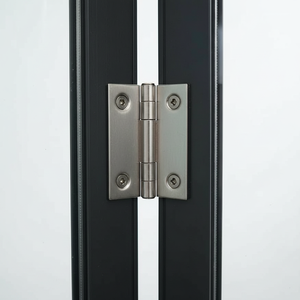
Modern Black Aluminum Bi-Fold Folding Door with Double Tempered Glass
Extruded 6063-T5 Aluminium | Multi-Point Locking
Direct-from-factory architectural bifold and multi-slide configurations engineered for high wind loads, maximum acoustic comfort, and seamless indoor-outdoor integration.
Extruded 6063-T5 Aluminium | Multi-Point Locking
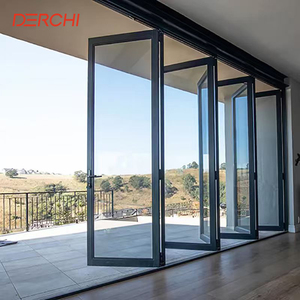
ASTM Impact Resistant | Soundproof PVB Interlayer
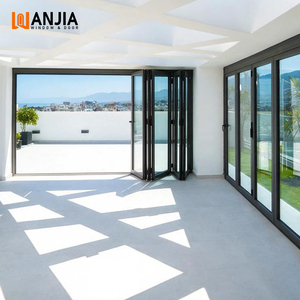
Polyamide PA66 Strip | Anti-Corrosion Marine Coat
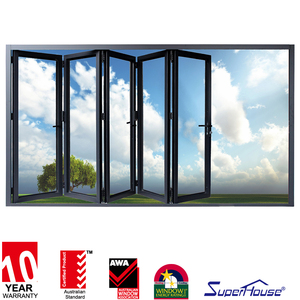
Concealed Roller Mechanism | Flush Threshold Option
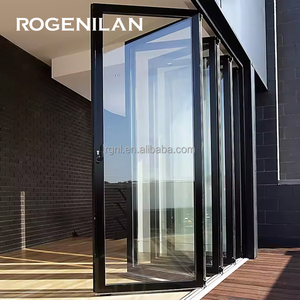
AS1288 Certified Glazing | Severe Weather Tested
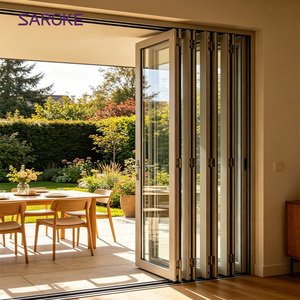
Argon Gas Infill | Warm Edge Thermally Insulated Spacer
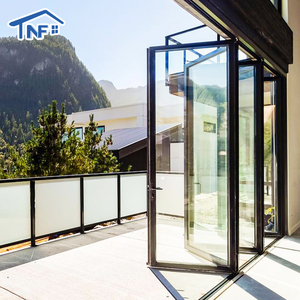
Energy Star Compliant | Low SHGC Thermal Efficiency
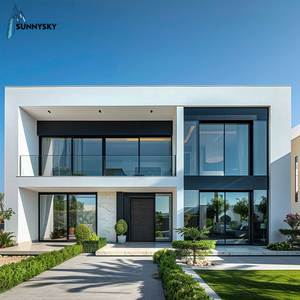
Four-Side Multi-Point Lock | Laminated Security Glass
Critical structural parameters, thermal dynamics, and cycle endurance specifications required for global architectural procurement.
Commercial longevity starts with the billet. We utilize virgin 6063-T5 and 6061-T6 architectural aluminium alloys, strictly controlling magnesium and silicon ratios to avoid post-extrusion micro-fractures. Wall thicknesses exceed standard requirements, ranging from 2.0mm to 3.0mm on load-bearing structural jambs to resist continuous wind pressure and panel deflection.
To eliminate interior condensation and lower overall building energy metrics, our systems integrate high-performance PA66 GF25 thermal break strips (polyamide reinforced with 25% glass fiber). This creates a structural barrier with coefficient thermal expansion matching aluminium, preventing thermal bridging and joint shear stress during extreme ambient shifts.
Bi-fold systems fail most frequently at hinge anchors and bottom guides. Our OEM hardware configurations utilize four-wheel stainless steel carriage bearings running on hardened internal tracks. Supporting up to 150 kg per panel, our roller mechanisms are tested through 100,000 continuous opening and closing cycles without operational drag.
From digital CNC profile machining to automated insulated glass assembly, our 180,000 m² Foshan headquarters provides full-spectrum OEM and ODM execution with absolute dimensional fidelity.
Exclusive four-side six-point interlocking mechanism delivering unparalleled intrusion protection and enhanced perimeter air tightness against driving storms.
Complete compliance portfolio including Australian AS 2047 & AS 1288, North American NFRC & CSA, European CE, and hurricane windborne impact ratings.
In-house team of 30+ R&D engineers generating detailed shop drawings, static wind load calculations, and structural anchoring schematics for swift municipal sign-off.
How architectural design shifts and stringent international decarbonization policies are reshaping custom door procurement through 2026–2030.
Architects are continuously demanding reduced sightlines. Modern OEM systems are moving from classical 85mm stiles toward ultra-slim 45mm to 55mm visual profiles without compromising I-value structural inertia. By incorporating aerospace-grade structural bonding, these systems offer higher glass-to-frame ratios while achieving elevated design pressures (DP).
Universal accessibility and barrier-free transitional indoor-outdoor living are driving the complete obsolescence of high step-over sills. Leading commercial projects now require subterranean sub-sill drainage troughs with integrated stainless steel grates, certified for severe water penetration resistance under Australian and European standards.
Large-format multi-panel bifold arrays (exceeding 6 panels or 3.2m height) increasingly integrate low-voltage concealed brushless DC motors. Automated locking and panel sequencing driven by smart-building management systems (BMS) are shifting bi-fold doors from simple manual fenestration to high-tech architectural building envelope elements.
Procurement teams across Australasia, North America, and Europe are transitioning toward Environmental Product Declarations (EPDs). Specifying low-carbon aluminium produced via renewable hydro-powered smelting ensures project developers meet green building benchmarks such as LEED v4.1, BREEAM, and Green Star.
Standard architectural powder coats quickly degrade within 1 km of ocean waters. Global buyers are standardizing on Qualicoat Class 2 or Class 3 fluorocarbon (PVDF) finishes, anodized coatings exceeding 25 microns, and all-grade 316 marine-grade architectural hardware to prevent galvanic corrosion and pitting.
To mitigate exorbitant on-site glazing labor costs in target markets such as Australia and the United States, tier-one manufacturers are now delivering factory-glazed, fully balanced assemblies inside bespoke steel-reinforced transport stillages, saving contractors up to 40% on installation timelines.
Practical commercial, technical, and regulatory clarity for overseas contractors, architectural designers, and fenestration distributors.
Our bi-fold systems utilize multi-stage EPDM vulcanized sealing gaskets combined with continuous internal drainage pathways and pressurized weeping valves. When closed, compression shoot-bolts force panels against the continuous jamb gaskets, consistently passing water penetration tests exceeding 450 Pa under AS 2047 / ASTM E331 test standards.
For coastal and cyclonic regions (such as Wind Region C/D in Australia or Florida HVHZ zones), we integrate steel-reinforced aluminium chambers, heavy-duty pinned hinges, and laminated safety glass featuring SentryGlas (SGP) or high-impact PVB interlayers capable of withstanding large missile impacts and cyclic wind forces.
Yes. As an OEM/ODM manufacturer, we fabricate bespoke opening schemes: even/odd configurations (e.g., 3+0, 3+1, 5+1, 7+0), outward or inward folding, and 90-degree postless open-corner bifold systems that eliminate central corner columns to deliver panoramic uninterrupted space.
Every commercial order is shipped with a comprehensive engineering dossier: official NATA/intertek laboratory test certificates (AS 2047, AS 1288, NFRC, CE), signed structural shop drawings, glass compliance certificates, and production warranty documentation enabling rapid sign-off by local private building certifiers.
Profiles are lined with electrostatic protective films, corner-capped with high-density EVA shock protectors, strapped with tensioned steel bands, and completely enclosed within fumigated non-wood composite plywood crates designed for swift forklift handling and sea transit protection.
Once shop drawings and hardware finishes receive client sign-off, standard production runs require 25 to 35 business days. Sea transit from South China to major Australian, New Zealand, or North American ports typically spans 14 to 22 days, with complete real-time container tracking supplied.
Send us your project elevations, architectural CAD drawings, or site schedule. Our structural engineers provide comprehensive bill-of-materials (BOM), thermal calculations, and factory-direct OEM pricing within 24 hours.
Contact Us