Curated Portfolio
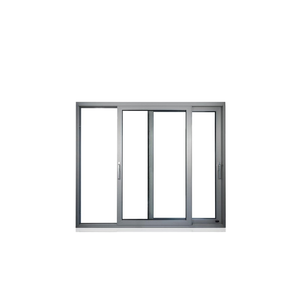
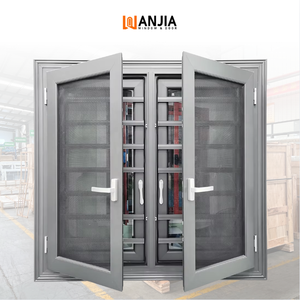
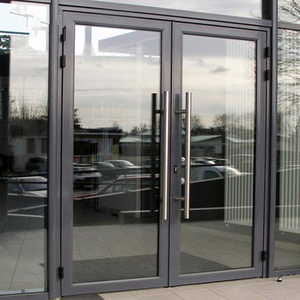
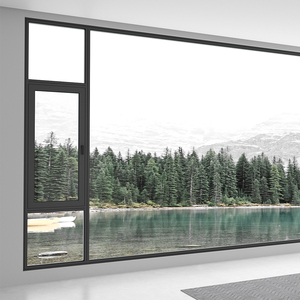
Precision-Engineered Architectural Window & Door Systems
Direct manufacturer export lines engineered for multi-residential, high-end private villas, and commercial exterior building envelopes.
Procurement Intelligence
Emerging Trends Shaping Global Fenestration Sourcing
Strategic structural shifts and statutory revisions commercial purchasers must navigate when importing aluminium fenestration systems over the next decade.
Total Lifecycle Carbon & Low-Carbon Billets
Global developers are aggressively mandating Environmental Product Declarations (EPDs). China's leading exporters are transitioning to aluminium extruded using renewable hydroelectricity, drastically lowering the embodied carbon score per metric ton to fulfill CBAM (EU) and LEED criteria.
Mandatory Thermal Breakdown Thresholds
International building codes (including NCC 2022 Section J in Australia, NZBC Clause H1, and EU EPBD) make non-thermally broken aluminium obsolete for conditioned spaces. Procurements now require multi-chamber polyamide 66 insulating struts (PA66GF25) exceeding 24mm to 34mm widths.
DFMA Integration & Prefab Enclosure Units
To counteract compounding on-site labor expenses across Australia, North America, and Europe, fenestration packages are sourced with integral sub-frames, standardized receptor flashings, and factory-glazed unitized assemblies engineered specifically for Design for Manufacture and Assembly (DFMA).
Technical Benchmark
Engineering Standards: Cross-Jurisdictional Compliance Matrix
How top-tier Chinese manufacturing operations validate structural integrity, water barrier thresholds, and thermal performance across diverse jurisdictions.
| Target Jurisdiction | Primary Standard | Key Compliance Metrics | DERCHI / Factory Verification Protocol |
|---|---|---|---|
| Australia & New Zealand | AS 2047 / AS 1288 | Serviceability (SLS) & Ultimate (ULS) wind pressure, air infiltration (<1.0 L/s·m²), water penetration resistance up to 450Pa+. | NATA-accredited lab reports, complete structural deflection calculations, and factory audit log verification per production run. |
| North America | AAMA/WDMA/CSA / NFRC | Design Pressure (DP50-DP100), Solar Heat Gain Coefficient (SHGC < 0.25), U-Factor (< 0.28 BTU/hr·ft²·°F), ASTM E1886/E1996 Large Missile D Impact. | NFRC certified thermal simulations, hurricane cyclical pressure chamber testing, and intertek-traceable quality records. |
| United Kingdom & Europe | BS EN 14351-1 / CE | Air permeability (Class 4), Watertightness (Class 9A/E750), Wind load resistance (Class C5), Uw values down to Passive House thresholds (<0.8 W/m²K). | CE Factory Production Control (FPC) audit documentation, thermal bridge numerical calculations per EN ISO 10077-2. |
| Tropical & Island Zones | Cyclone Testing (C3/C4) | Resistance to destructive barometric differentials, salt fog corrosion (ASTM B117 > 3,000 hrs), projectile impact resistance. | 6060-T66 virgin marine extrusions, 316-grade stainless hardware, multi-layer PVDF/Fluorocarbon electrostatic coatings. |
Product Evolution
Engineering Advances in Aluminium Window Technology
A breakdown of system improvements differentiating elite tier-1 fabrication from baseline commodity-grade assemblers.
Patented Anti-Intrusion Locking Kinematics
Modern engineering eliminates traditional failure points. Exemplified by DERCHI's proprietary Four-Side Six-Point Lock system, perimeter gearing interlocks into heavy-duty keeper brackets simultaneously, resisting levering forces while distributing equalized perimeter gasket compression for enhanced soundproofing.
Isothermal Chamber & Multi-Cavity Design
High-end window design moves beyond simple two-chamber extrusions. Leading systems incorporate multi-cavity thermal struts backfilled with aerogel or low-density foamed polyolefin insulation, neutralizing internal convection currents and preventing internal condensation even at -30°C temperature deltas.
Minimalist Sightlines with High Moment of Inertia
Architectural demand favors ultra-slim visible mullions without sacrificing wind load tolerances. Exporters achieve this by integrating concealed high-tensile steel stiffeners directly inside structural hollows, achieving moment of inertia (Ix) metrics capable of spanning 4.5-meter vertical expanses.
Manufacturing Scale
Enterprise Capabilities: Why Global Importers Rely on DERCHI
Operating from Foshan, Guangdong—the world capital of aluminium extrusion—Guangdong Dejiyoupin Doors and Windows Co., Ltd. represents top-tier Chinese manufacturing.
01
Foshan Mega-Facility
180,000 m² modern manufacturing footprint backed by more than 600 specialized technicians, outputting over 1,000,000 m² of certified fenestration per year.
02
In-House Engineering
A specialized R&D division of 30+ senior facade and window design engineers supporting OEM/ODM shop drawings, static analysis, and structural wind evaluations.
03
Comprehensive Testing
International certifications covering Australian AS 2047, European CE, American NFRC, and Canadian CSA, recognized with "China Famous Brand" distinction by Xinhua News Agency.
04
Turnkey Shipping Logistics
Custom container optimization, ocean-safe heavy timber crating with shock protection, moisture-barrier wrapping, and direct export customs processing.
Due Diligence FAQ
Frequently Asked Questions for Commercial Buyers
Direct, unvarnished guidance on mitigating risk, verifying quality standards, and coordinating supply chains with Chinese exporters.
How do commercial buyers verify genuine AS 2047 or CE compliance from Chinese factories?
Legitimate compliance requires reviewing full NATA or accredited third-party laboratory test reports—not generic photocopied certificates. Confirm the test specimen sizes, cross-sectional profile diagrams, and glass build-ups match your project specifications. Top manufacturers such as DERCHI offer traceable compliance dossiers including glass batch numbers, PVB/SGP interlayer certificates, and physical wind-chamber test records.
What is the difference between 6063-T5 and 6060-T66 aluminium alloy specifications?
While 6063-T5 is standard for residential fenestration, 6060-T66 provides enhanced mechanical properties with tighter extrusion tolerances and superior surface finishes suitable for high-durability anodizing. For coastal high-wind environments or oversized panoramic frames, high-tensile 6060-T66 or 6005A-T6 profiles provide higher yield strength and deflection resistance.
How are glass units protected against condensation and seal failure over ocean transit?
Sea freight involves significant humidity and barometric changes. Tier-1 exporters utilize dual-seal insulated glass units (IGUs) composed of primary polyisobutylene (PIB) combined with secondary structural silicone, alongside molecular sieve desiccant inside warm-edge spacers. For high-altitude destinations, capillary tubes are factory-installed to equalize atmospheric pressure and crimped post-delivery on-site.
What packaging standards prevent transit damage during container handling?
Standard plastic wrap is insufficient for intermodal container movements. Direct procurement protocols should require: 1) Low-tack surface protection films on all visible metal surfaces; 2) Molded hard-rubber corner protectors; 3) Fully enclosed, heat-treated fumigated solid-plywood crates with internal steel strapping; 4) Desiccant bags inside moisture-barrier lining; 5) Detailed container pack schedules ensuring center-of-gravity balance.
What are typical lead times from technical approval to port dispatch?
Standard custom project workflows span 35 to 45 calendar days after shop-drawing sign-off and production deposit receipt. Specialized finishes (such as fluorocarbon PVDF coatings, dual-color extrusions, or oversized curved laminate units) require 45 to 55 days. Ocean shipping adds 14-18 days to Australia East Coast, 25-30 days to North American West Coast, and 30-38 days to Northern Europe.
How can buyers handle on-site installation tolerances when sourcing remotely?
Exporters provide full shop drawings with standardized sub-sills, sub-heads, and continuous perimeter reveal fin channels. These components allow 15-25mm installation adjustment clearances, absorbing standard rough opening variances on site without requiring structural frame modifications. Detailed CAD/BIM cut sheets and 3D installation videos are supplied for site teams.
Connect Directly with Our Commercial Engineering Department
Review comprehensive system specs, verify project wind ratings, review full test reports, or schedule a virtual inspection of our Foshan production facility.