Featured Commercial & Residential Door & Window Assemblies
Precision-extruded architectural systems engineered with high-yield 6063-T5/T6 structural aluminium alloy, integrated multi-point security hardware, and multi-chamber thermal barriers designed for harsh climatic environments.
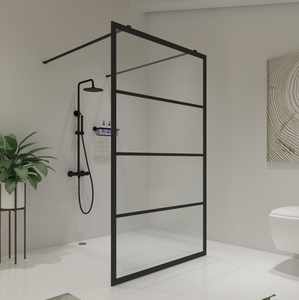
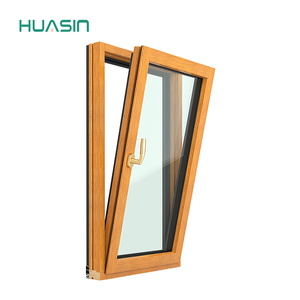
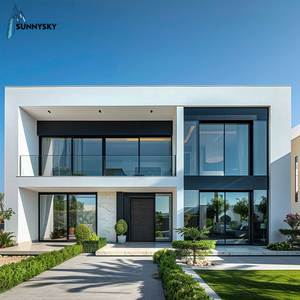
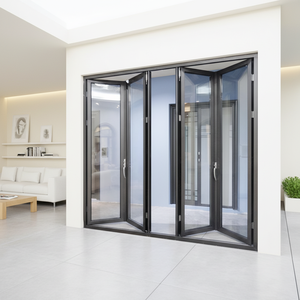
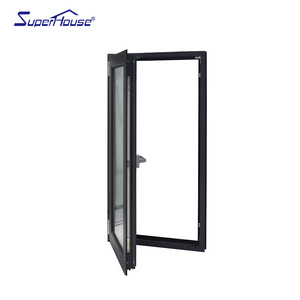
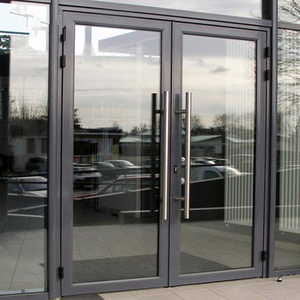
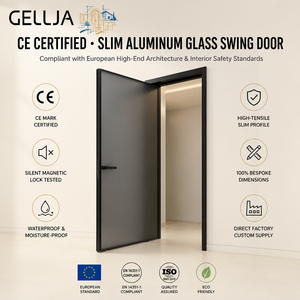
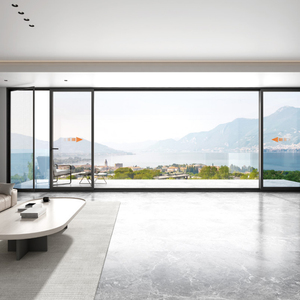
Scale, Engineering Precision, & Global Export Verification
Operating out of the primary industrial metal fabrication corridor in Foshan, Guangdong, our manufacturing complex integrates German CNC tooling, automated double-glazing lines, and in-house testing rigs for structural wind load, water penetration, and thermal cycle testing.
Engineering Architectural Aluminium Double Doors: The Comprehensive Global Exporter Whitepaper
In contemporary architectural building envelopes, aluminium double doors represent the critical junction between structural stability, security performance, acoustic attenuation, and thermal boundary discipline. As commercial builders, developers, and wholesale distributors transition toward stringent net-zero energy guidelines and weather-resilient envelopes, sourcing factory-direct structural aluminium double door assemblies from established Chinese manufacturers has evolved from pure cost-arbitrage into a strategic procurement partnership.
Selecting a qualified Chinese wholesale manufacturer requires deep scrutiny of metallurgical specifications, thermal brake engineering, glass unit integrity, and multi-point perimeter compression mechanics. At Guangdong Dejiyoupin Doors and Windows Co., Ltd. (operating the DERCHI engineering facility), structural double door production is executed under rigorous ISO 9001:2015 process controls. Raw billets of virgin aluminium alloy 6063 are homogenized and heat-treated to T5 or T6 hardness states, generating a minimum tensile strength of 160 MPa and a yield strength exceeding 110 MPa. This structural rigidity allows architects and facade consultants to specify massive floor-to-ceiling double-leaf openings exceeding 3000 mm in height without incurring deflection risk under high ultimate wind pressures (ULS).
"Architectural compliance cannot be retrofitted at the construction site. For export destinations across Australia, New Zealand, North America, and Europe, structural double doors must integrate verified polyamide thermal barriers, argon-infused low-emissivity insulated glazing units, and laboratory-certified hardware locking junctions before containerized dispatch."
Metallurgy, Thermal Insulation Architecture, & Polyamide PA66 GF25 Barriers
The predominant failure point of non-engineered commercial double doors is thermal bridging, leading to internal condensation, frame sweat, mold development, and rapid building HVAC energy degradation. In our Foshan production facility, thermal break aluminium profiles are fabricated through mechanical crimping of Technoform polyamide PA66 strips reinforced with 25% chopped fiberglass (PA66 GF25). These glass-fiber reinforced nylon strips have a coefficient of linear thermal expansion practically identical to aluminium (2.3 × 10⁻⁵ /K vs. 2.4 × 10⁻⁵ /K), preventing frame delamination, internal stress cracking, or shear separation across extreme operational temperature differentials ranging from -35°C to +80°C.
Through the implementation of multi-chamber thermal isolators, our double door systems attain overall window-wall thermal transmittance values (U-factors) as low as 1.2 to 1.6 W/(m²·K), effortlessly exceeding the energy stringency demands of the Australian National Construction Code (NCC 2022 Volume One & Two), New Zealand Building Code (NZBC Clause H1 5th Edition), and North American ASHRAE 90.1 energy performance baselines.
Acoustic Engineering, Perimeter Hermetic Sealing, & Cyclone Water Penetration Defense
Active double-leaf French entrance doors and commercial storefront swing configurations present dual sealing challenges along the astragal meeting stile, corner joints, and door threshold sill. Standard commercial double doors often rely on superficial brush seals that deteriorate quickly under direct UV exposure. In contrast, our wholesale assemblies utilize co-extruded cellular EPDM (ethylene propylene diene monomer) gasket compounds combined with foamed silicone weatherstripping lines around the full perimeter.
When paired with asymmetric acoustic laminated double-glazing configurations—such as 6mm Low-E Toughened + 16A Argon warm-edge spacer + 6.38mm / 8.76mm PVB/SentryGlas acoustic laminate—the sound transmission class (STC) achieves 38 dB to 44 dB reduction, neutralizing heavy urban traffic noise, airport approach noise, and extreme wind whistle. For cyclonic wind-borne debris regions (Northern Queensland Region C/D and Pacific Islands), doors are engineered with reinforced structural mullions, continuous heavy-duty butt hinges rated for 250 kg per leaf, and subsurface drainage check valves preventing rain blowback during hurricane water penetration tests up to 600 Pa.
| Performance Characteristic | Standard Commercial Grade | DERCHI Architectural Export Grade | Compliance Test Benchmark |
|---|---|---|---|
| Aluminium Alloy & Temper | Recycled / Low-yield 6063-T4 | Primary Billet 6063-T5 / 6063-T6 Structural | ASTM B221 / GB 5237.1 |
| Thermal Barrier Method | Pour-and-Debridge / PVC Strips | Polyamide PA66 GF25 Multi-Chamber | EN 14024 Shear & Elasticity |
| Glazing Unit Thickness | 16mm Single-Seal Argon | 28mm - 42mm Double/Triple IGUs + Warm Edge | AS/NZS 2208 / IGCC / CE |
| Multi-Point Security Locking | Single Deadbolt / 2-Point Throw | Patented 4-Side 6-Point Multipoint Hardware | PAS 24 / RC3 / AS 2047 Sec. 7 |
| Surface Treatment Resilience | Standard Anodized (10-15μm) | AkzoNobel / Qualicoat Seaside Class 2 (25μm) | AAMA 2604 / AAMA 2605 3000hr Salt Fog |
| Water Tightness Under Pressure | 150 Pa - 250 Pa Standard | 450 Pa - 600 Pa Positive Static Head | AS 4420.4 / EN 12208 Class 9A |
Future Procurement & Technological Trends in Aluminium Double Doors
How international building codes, ESG environmental requirements, and smart home automation systems are reshaping wholesale export manufacturing over the next five to ten years.
Ultra-Low Carbon "Green Aluminium" & Circular LCA
Institutional real estate investors and Tier-1 developers are demanding Environmental Product Declarations (EPDs) with documented embodied carbon metrics. The transition toward hydroelectric-smelted primary aluminium billets, high-recycled scrap content (up to 75% post-consumer), and cradle-to-cradle circular certifications is quickly becoming a mandatory pre-qualification gate in government and green-star architectural tenders.
IoT Integration, Concealed Automation & Biometrics
Architectural double doors are moving rapidly beyond manual keys. The future lies in concealed electronic multi-point locksets driven by brushless DC servomotors, concealed flush magnetic reed switches for perimeter intrusion detection, smart home BACnet/Matter protocol synchronization, and integrated structural biometric access panels flush-mounted directly inside the extruded aluminium profile.
Ultra-Narrow Sightlines with Monolithic Giant Glazing
The demand for minimalist luxury architecture has accelerated the adoption of structural glazing double door systems where the sightline width of meeting stiles is compressed below 50mm without sacrificing inertia modulus. By structurally bonding the insulated glass unit directly into the pocket via structural two-part silicone adhesives, the glass panel acts as a stiffening diaphragm, allowing panoramic views with minimal frame visibility.
Structural System Architecture & Hardware Topology
Modular design matrix accommodating heavy-traffic commercial storefronts, hotel exterior terraces, luxury residential balconies, and coastal hurricane envelopes.
Structural Heavy-Duty Frame Profiles
Engineered profile cross-sections featuring wall thicknesses from 2.0 mm to 3.0 mm. Profile chambers are geometrically reinforced with internal webs to withstand dynamic cyclic wind gusts up to 4500 Pa without plastic deformation.
- Frame Outer Depth75mm - 120mm
- Profile Wall Thickness2.0mm - 3.0mm
- Extrusion StandardEN 12020-2 / GB 5237
- Corner ConstructionCast Cleat + Epoxy Injection
Multi-Point Lock & Heavy Load Hinges
Integrating our exclusive Four-Side Six-Point Lock technology. Solid forged stainless steel SUS304/SUS316 locking gear delivers uniform perimeter gasket compression while providing maximum resistance against forced crowbar entry.
- Hinge Load Capacity250 kg / Leaf (Tested 200k cycles)
- Locking Configuration6-Point Transmission Drive
- Cylinder SecurityAnti-Drill Class 3 Euro Profile
- Hardware OriginDERCHI In-House & Roto / Siegenia
Insulated Glazing & Thermal Barrier Matrix
Automated robotic secondary sealing with silicone or polysulfide compounds. Low-E coatings from Saint-Gobain and CSG Glass reflect long-wave infrared radiation while maximizing natural visible light transmittance.
- Glass Build-Up5mm+12A+5mm to 10mm+16A+10mm
- Gas Fill Cavity95% Pure Argon Sealed
- Thermal SpacerSwisspacer Warm Edge System
- Acoustic DampingRw 36 dB - 44 dB
Why Developers & Wholesalers Partner with DERCHI
Guangdong Dejiyoupin Doors and Windows Co., Ltd. is ranked among the Top 10 fenestration enterprises in China, validated by Xinhua News Agency as a "China Famous Brand", delivering unmatched reliability from Foshan to the world.
Zero-Tolerance QC System
From raw extrusion spectrometry to 100% dry-run perimeter squaring verification, every double door unit undergoes 360° inspection prior to multi-layer export crating.
25+ Years Manufacturing Heritage
Over two decades of precision fenestration experience across 18,000+ completed commercial and residential projects in 80+ countries worldwide.
Global Standard Certifications
Certified compliance portfolios holding Australian AS 2047, European CE, American NFRC, Canadian CSA, Energy Star, and ISO 9001 quality accreditations.
Turnkey Export Packaging
Protective anti-scratch PE film, corner cushion protectors, high-strength fumigated solid wooden crates, and moisture-controlled sea container blocking systems.
Frequently Asked Questions for Wholesale Double Door Importers
Direct engineering and commercial answers to critical questions faced by developers, importers, and quantity surveyors during international procurement.
What are the key structural requirements when importing aluminium double doors under AS 2047 or CE guidelines?
How does your factory prevent galvanic corrosion and salt spray degradation in coastal installations?
Can your engineering team accommodate custom architectural CAD/BIM drawings and non-standard openings?
What is the standard production lead time and maritime container loading protocol for project orders?
What are the acoustic attenuation properties of your double door configurations in hospitality applications?
What warranties and after-sales support mechanisms are provided to wholesale importers?
Accelerate Your Commercial Window & Door Supply Chain
Direct factory pricing, custom architectural shop drawings, certified AS 2047/CE structural validation, and full containerized export support. Connect with our engineering estimators today to request an itemized project quotation.