Flagship Certified Architectural Portfolio
Verified structural deflection limits, high water impermeability, superior acoustic dampening, and advanced multi-point security hardware manufactured to strict international CE criteria.
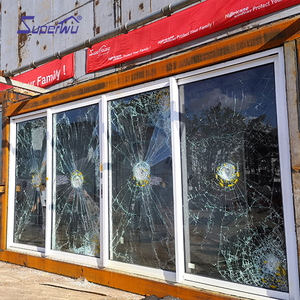
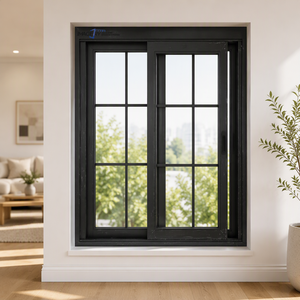
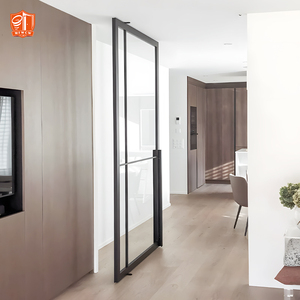
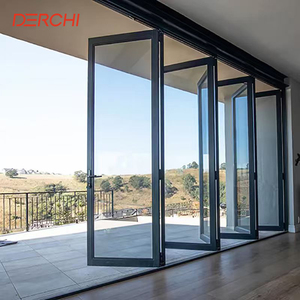
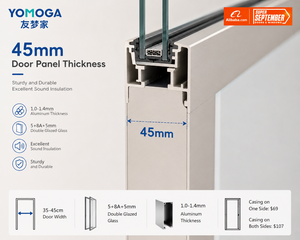
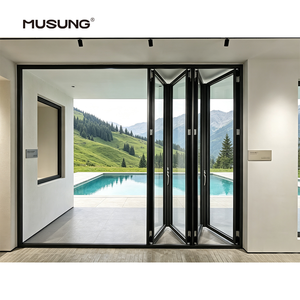
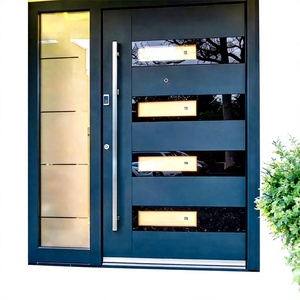
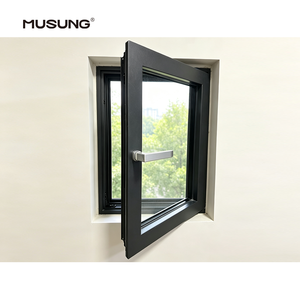
Engineering Rigor Behind CE Marked Fenestration Systems
In modern commercial and high-density residential architecture, a CE marking according to EN 14351-1 represents far more than an administrative passport—it confirms essential characteristics covering safety, mechanical stability, thermal retention, and structural survivability under environmental extremes.
Structural Load & Wind Resistance
Under EN 12210 classifications, our extruded aluminum profiles undergo stringent dynamic positive and negative pressure stress analysis. Incorporating custom alloy tempers (6063-T5 / 6063-T6) ensures minimal deflection (Class C3/B3) even under hurricane-grade wind loads surpassing 3000 Pa, safeguarding building envelope integrity.
Hydrostatic Air-Tightness
Water infiltration resistance tested to EN 12208 criteria reaches Class 9A or higher. Utilizing continuous, vulcanized EPDM triple gaskets and multi-chambered internal sub-sill weep drainage designs, our assemblies eliminate capillary seepage during heavy, driving windstorms common across coastal and tropical regions.
Low-U Fenestration Thermal Breaks
Meeting EN ISO 10077-1/2 mandates, our systems leverage multi-cavity polyamide (PA66 GF25) thermal barriers. Paired with argon-filled low-emissivity (Low-E) double or triple warm-edge insulated glass units (IGUs), complete system overall heat transfer coefficients (Uw) scale as low as 1.1 W/m²·K to satisfy global green building codes.
| Performance Attribute | Standard Reference | Certified Baseline Metric | DERCHI Engineered Project Spec |
|---|---|---|---|
| Air Permeability | EN 12207 / AS 2047 | Class 3 (600 Pa) | Class 4 High-Airtight (Exceeds 600 Pa, Q100 ≤ 0.5 m³/h·m) |
| Water Tightness | EN 12208 / ASTM E331 | Class 7A (300 Pa) | Class 9A+ (600 Pa to 900 Pa hydrostatic head resistance) |
| Wind Resistance & Deflection | EN 12210 / AS 4055 | Class C2 (P3 = 800 Pa) | Class C4/B5 (P3 up to 3000 Pa Hurricane Impact Certified) |
| Thermal Transmittance (Uw) | EN ISO 10077-1 / NFRC | Uw ≤ 2.2 W/(m²·K) | Uw 1.1 – 1.4 W/(m²·K) with PA66 GF25 & Argon Low-E IGUs |
| Acoustic Attenuation (Rw) | EN ISO 717-1 / ASTM E90 | Rw ≥ 30 dB | Rw 38 dB – 44 dB with asymmetric laminated safety glazing |
Future Procurement Trends in Architectural Fenestration
Architects, facade consultants, and general contractors are navigating shifting regulatory terrains. Procurement decisions now prioritize long-term life-cycle assessment, hyper-customization, and passive envelope engineering.
Ultra-Narrow Sightlines & Oversized Spans
The demand for minimalist luxury has pushed profile sightlines down to 20–25mm while simultaneously expanding sash heights up to 4.5 meters. Modern developments require high-tensile alloy compositions and concealed roller systems capable of carrying leaf weights upwards of 500kg effortlessly.
Embodied Carbon & Circular Supply Chains
Government sustainability mandates (such as EU Green Deal and LEED certifications) require comprehensive Environmental Product Declarations (EPDs). Procuring organizations are shifting toward manufacturers utilizing hydro-powered low-carbon aluminum billets and post-consumer recycled extrusion streams.
Smart Fenestration & Building Automation
Motorized slide systems, magnetic induction sensors, integrated solar control glass, and centralized Building Management System (BMS) synchronization are transitioning from specialized options to core requirements for premier high-rise and luxury residential packages.
Guangdong Dejiyoupin (DERCHI) Industrial Strength
Headquartered in Foshan, China—the global epicenter of aluminum manufacturing—DERCHI stands as a Top 10 Chinese Door & Window brand, integrating vertical supply operations from CAD engineering to final containerized crating.
180,000 m² Mega Base
Equipped with computerized 4-axis and 5-axis CNC profile machining centers, automated glass curing lines, and precision assembly lines ensuring zero-tolerance alignment across massive batches.
Patented Security Mechanics
Inventors of the patented Four-Side Six-Point Anti-Theft Lock mechanism, converting large glass swing and entry doors into impenetrable structural access points with RC3/RC4 burglar resistance.
Multinational Certification Grand Slam
Certified simultaneously for CE (Europe), AS 2047 / AS 1288 (Australia & New Zealand), NFRC / NOA Hurricane Testing (USA), and CSA (North America) under strict ISO 9001 factory control audits.
Heavy Export Crating Protocols
Custom fumigated plywood casing, structural edge buffering, and desiccated wrapping protect anodized and fluorocarbon powder-coated finishes through multi-week ocean transit routes.
Frequently Asked Questions on Aluminum Fenestration Procurement
Authoritative technical clarification on specifications, quality inspection benchmarks, engineering shop drawings, and international logistics execution.
Q1 How does DERCHI substantiate CE certification compliance for commercial envelopes?
Every commercial delivery is accompanied by an authenticated Declaration of Performance (DoP) referencing standard EN 14351-1. Our assemblies are submitted to accredited third-party notified bodies (Notified Testing Laboratories) for initial type testing (ITT) regarding air permeability, watertightness, wind resistance, and dangerous substances release. Test reports and CE labeling are supplied for project certifier sign-offs.
Q2 What aluminum extrusion alloys and surface finishes are applied for marine exposure?
We strictly utilize primary architectural billets of 6063-T5 or 6063-T6 aluminum. For marine or high-salinity atmospheres, profiles receive either Qualicoat Seaside Class powder coatings (film thickness ≥ 60μm) or high-grade anodized architectural coatings (Class AA20 or AA25, 20-25μm) passing standard 3,000-hour acetic acid salt spray (AASS) tests without pitting.
Q3 Can configurations adapt to varied regional wind load and seismic certifications?
Yes. DERCHI maintains an engineering staff of over 30 R&D structural engineers. Based on project structural calculations (Uplift, Ultimate Limit State [ULS], Serviceability Limit State [SLS]), we engineer heavy internal aluminum mullion reinforcements, steel stiffeners, and anchor brackets to conform seamlessly with local structural codes, including American NOA hurricane zones and Australian cyclonic wind ratings.
Q4 How does the factory manage IGU seals and prevent glass delamination/fogging?
Our automated glass processing lines assemble dual-sealed or triple-sealed Insulated Glass Units (IGUs) incorporating high-purity argon gas fills (≥ 90%). Primary sealants utilize polyisobutylene (PIB) to eliminate vapor penetration, reinforced by a structural secondary silicone seal. Safety laminated glass panels incorporate genuine Kuraray or Solutia PVB/SGP interlayers for maximum clarity and structural retention.
Q5 What is the typical end-to-end production schedule and ocean transit timeline?
Standard architectural custom fabrication ranges from 25 to 35 business days following formal sign-off of shop drawings and finish swatches. Sea freight transit times from Shenzhen or Guangzhou ports average 14–18 days to Australia/New Zealand, 18–25 days to the West Coast USA, and 28–35 days to principal European seaports. Comprehensive container load plans maximize container cube utilization and minimize handling hazards.
Q6 Are comprehensive CAD and BIM technical drawings provided prior to fabrication?
Absolutely. Every custom commercial and residential project receives a full package of detailed shop drawings, including 2D elevation schedules, horizontal/vertical jamb details, mullion junctions, anchor location schematics, and flashing cross-sections. Our in-house engineering team works directly with project architects to eliminate coordination mismatches before tooling begins.
Engage with DERCHI's Fenestration Engineering Division
Submit your architectural blueprints, schedule of openings, or structural performance requirements. Our technical project directors will prepare a certified specification report and factory-direct proposal within 24 hours.
Send an Inquiry