Engineered Architectural Window & Door Systems
Compliant with CE marking, EN 14351-1, AS 2047, and North American NFRC hurricane requirements. Designed with structural multi-chamber thermal breaks and high-performance safety glazing.
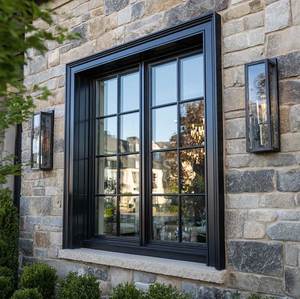
Sunnysky Aluminium Frame Double Glazed Casement Windows
Engineered for low-emissivity performance, acoustic damping up to 42 dB, and triple-sealed perimeter compression for harsh climates.
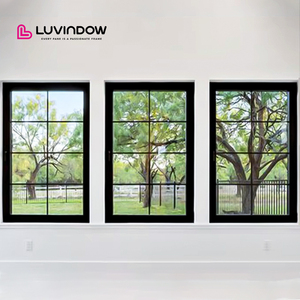
Hurricane Proof High Impact Black Profile Aluminium Windows
Architectural minimalist profile integrating PVB/SGP laminated security glass capable of withstanding severe cyclic wind pressures.
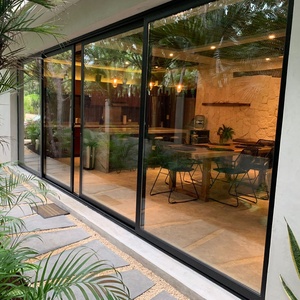
Heat Insulation Modern Sliding Windows & Stacker Doors
Heavy-duty bottom roller systems holding sashes up to 400 kg. Features low-profile flush sills for seamless indoor-outdoor architectural flow.
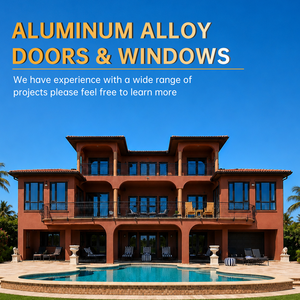
EOKO Custom Casement Windows & Sliding Doors for Villas
Complete architectural suite tailored for luxury residential villas, incorporating German multipoint hardware and premium fluorocarbon coatings.
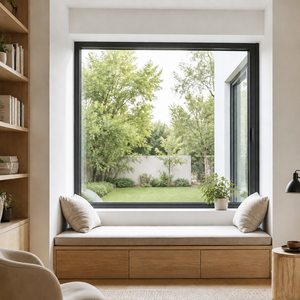
Commercial Waterproof Weather Resistant Casement Windows
Designed for commercial office developments with enhanced structural mullions, anti-sag friction stays, and high water-tightness thresholds.
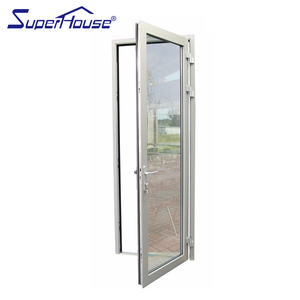
NFRC NOA Hurricane Impact Balcony Casement & Doors
Certified for designated high-velocity hurricane zones (HVHZ). Heavy extruded 6063-T6 alloy with structural silicone structural glazing.
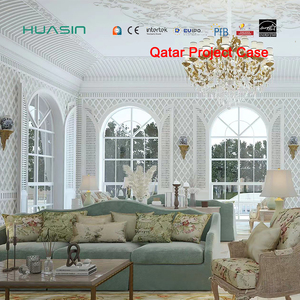
Architectural Inward Opening Aluminium-Clad Wood Systems
Combines external powder-coated architectural aluminium weather-shielding with certified sustainable timber interiors for optimal insulation.
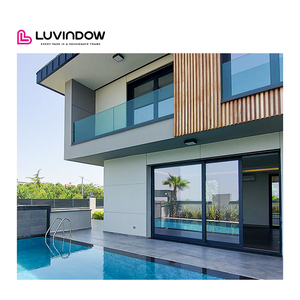
Thermal Break Aluminium Swing Windows & Entry Doors
Precision-fitted with PA66 GF25 thermal barrier strips, reducing conductive heat transfer to meet stringent thermal transmission metrics.
State-of-the-Art Production Facility & Supply Chain Reliability
Headquartered in Foshan, China, our manufacturing complex serves Tier-1 contractors, facade consultants, and direct importers across Europe, North America, Oceania, and the Middle East.
Precision Intelligent Extrusion & Assembly
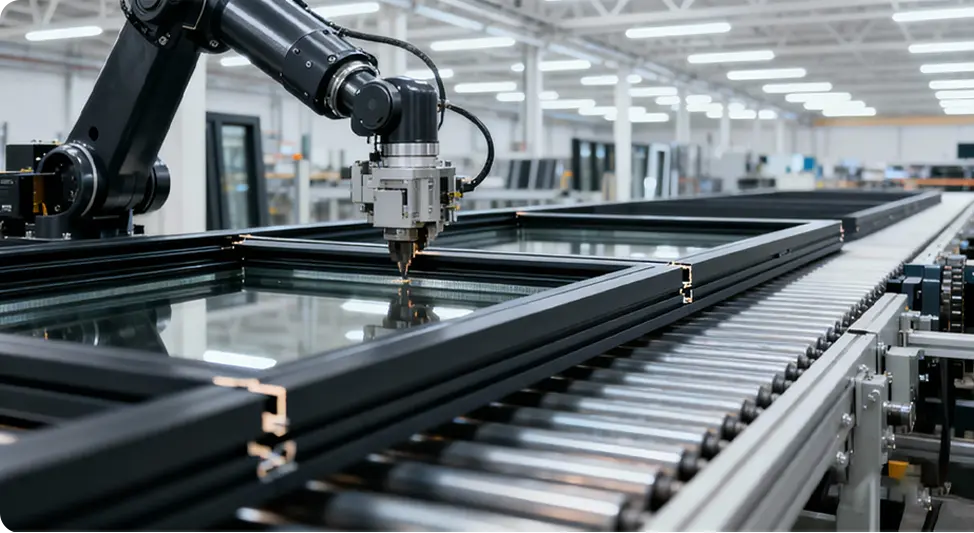
Certified under the European harmonized standard EN 14351-1 for windows and external pedestrian doorsets, our facility operates high-precision automated CNC machining centers. We eliminate human-induced assembly variances through 360-degree inline vision inspection, mechanical corner-crimping with dual-component structural polyurethanes, and laser-guided gasket seating.
Recognized as an industry leader certified by Xinhua News Agency, we incorporate our patented Four-Side Six-Point Perimeter Locking Architecture, providing superior RC2 and RC3 burglar-resistance ratings alongside high acoustic comfort.
- ✓ Alloy Integrity: 6063-T5 and 6063-T6 virgin architectural billet extrusion
- ✓ Surface Finishing: Qualicoat Seaside Class 2 certified powder coats & 25µm PVDF
- ✓ Hardware Compatibility: Native support for Sobinco, Siegenia, and Roto hardware
The Future of Architectural Fenestration Sourcing (2025–2030)
Empirical shifts in commercial building codes, decarbonization requirements, and international trade compliance are transforming how developers and importers procure fenestration.
Low Embodied Carbon & Green Aluminium
Institutional developers increasingly mandate certified Environmental Product Declarations (EPDs). The market is moving toward circular smelting using renewable hydro-power, yielding primary billet with emissions below 4.0 kg CO2e per kg aluminium.
- Verified Cradle-to-Grave Life Cycle Assessments
- Post-consumer recycled content exceeding 35%
- EU Carbon Border Adjustment Mechanism (CBAM) readiness
Hyper-Insulation & Sub-0.80 U-Values
Stricter regional codes—such as Germany’s GEG, UK Part L, and North American Energy Star 7.0—require structural frame optimization via multi-cavity polyamide struts and triple/vacuum insulating glass units (VIG).
- Warm-edge hybrid TPS spacers as industry standard
- Cavity gas retention testing (90%+ Argon stability)
- Passive House Institute (PHI) component compliance
Extreme Climate & Resilient Engineering
Rapid climate shifts have led to higher wind pressure requirements and coastal storm surge regulations across Oceania, the Caribbean, and the US Atlantic coastline. Heavy structural mullion reinforcement is essential.
- Structural Silicone Glazing (SSG) for cyclic fatigue
- Multi-point locking to stop perimeter air infiltration
- SentryGlas (SGP) laminated systems for non-shattering resilience
| Compliance Standard | Target Market | Core Testing Parameters | Factory Verification Protocol |
|---|---|---|---|
| EN 14351-1 (CE Mark) | European Union & EEA | Air Permeability (EN 12207), Water Tightness (EN 12208), Wind Resistance (EN 12210) | Factory Production Control (FPC) audit & Notified Body Initial Type Testing (ITT) |
| AS 2047 / AS 1288 | Australia & New Zealand | Deflection (AS 4055), Operating Force, Air Infiltration, Water Penetration Resistance | NATA accredited laboratory physical testing & serialized compliance tags |
| NFRC / AAMA / WDMA | North America | U-Factor, Solar Heat Gain Coefficient (SHGC), Visible Transmittance (VT), Air Leakage | Thermal simulation modelling via THERM/WINDOW & independent test validation |
| TAS 201 / 202 / 203 | High-Velocity Hurricane (HVHZ) | Large Missile Impact, High Cyclic Static Pressure Differential, Structural Load Verification | Miami-Dade NOA qualification & Florida Product Approval (FPA) tracking |
Fenestration Engineering: Core Technical Advancements
How advanced profile geometry, structural chemistry, and smart architectural integration are defining modern facade systems.
Isothermal Thermal Break Barriers
By shifting from standard flat polyamide extrusions to custom multi-cavity, glass-fiber reinforced PA66 GF25 inserts containing low-emissivity reflective flags, profile thermal transmission ($U_f$) is pushed down below 1.2 W/(m²·K), preventing condensation across humid or sub-zero environments.
Corrosion Shielding for Coastal Installations
Salt spray in coastal zones can degrade standard electrostatic coatings. Our pre-treatment protocol incorporates multi-stage zirconium non-chrome passivation followed by high-thickness architectural powder curing, passing the rigorous 3,000-hour Acetic Acid Salt Spray (AASS) test without blistering.
Motorized Facades & Building Automation
Modern fenestration interfaces directly with smart Building Management Systems (BMS). Concealed 24V DC chain actuators, inductive power hinges, and integrated magnetic reed contacts enable automated night-purge natural cooling and unified fire-smoke clearance paths.
Frequently Asked Questions for Window Importers & Contractors
Essential technical, compliance, and logistics clarifications for project stakeholders.
Q1: How does CE marking under EN 14351-1 impact import customs clearance in Europe?
The CE mark under EN 14351-1 serves as a mandatory declaration of performance (DoP). European customs authorities and building control officers require this documentation alongside the manufacturer's accredited third-party test reports covering mechanical strength, thermal transmittance ($U_w$), and water tightness. We provide a full technical file and signed DoP with every container load.
Q2: What steps ensure sea transit protection against glass delamination and profile oxidation?
Ocean freight exposes cargo to salt humidity, vibration, and temperature swings. We apply peelable protective UV-resistant films directly onto extrusion faces, wrap all perimeter corners in EVA caps, insert anti-desiccant gel bags inside glass cavity bundles, and crate everything in steel-banded, fumigated solid wood ocean crates engineered for crane sling handling.
Q3: How do you verify sound insulation metrics for multi-family residential projects?
Acoustic performance is primarily determined by glass mass, asymmetric pane thicknesses, and laminate acoustic PVB damping cores (e.g., 6mm Float + 1.14mm aPVB + 8mm Float). Our insulated systems achieve laboratory-tested Sound Transmission Class (STC) ratings up to 45 dB and Weighted Sound Reduction Index ($R_w$) values suitable for airport and rail corridor developments.
Q4: Can custom extrusions and thermal break dies be engineered for bespoke architectural projects?
Yes. With our in-house tooling facility, we produce custom extrusion dies for large commercial orders in approximately 15 to 20 days. Once the die trial is signed off via 3D coordinate scanning against CAD drawings, initial structural sample prototypes are assembled for physical air/water/deflection chamber testing.
Q5: What are your standard structural deflection thresholds for high-rise ribbon window facades?
For high-rise commercial structures subject to severe wind pressures, mullion deflection is calculated according to the L/175 or L/250 criteria (serviceability limit state), not to exceed 20 mm under full design pressure (DP), ensuring safety and protecting glass edge clearances from structural pinching.
Q6: How do you maintain color consistency across multiple project delivery batches?
To avoid batch-to-batch color shifts, we utilize single-source architectural resin powders (e.g., AkzoNobel or PPG) with identical production batch numbers. Spectrophotometric Delta E ($\Delta E$) readings are taken throughout application, ensuring chromatic tolerances remain strictly within $\Delta E \le 0.50$.
Engage Our Facade Engineering Team Today
Send us your window schedules, architectural elevations, and performance specifications for an itemized commercial tender and technical compliance report.
Get a Quote