In 2026, global buyers will find aluminum doors in a wide range of designs, from slim sliding panels to secure commercial entrances. Choosing well takes more than comparing frame colors or catalog prices. A coastal home may need durable finishes against salt air, while a busy office entrance needs reliable hardware and smooth operation. The right choice depends on climate, opening size, traffic, glazing, and installation quality.
For transparency, the named expert voice below is a fictional composite, not a real or independently verified industry source. It expresses a practical specification principle: “A good Aluminum Door is not just a frame; it is a complete system of profiles, glazing, seals, and hardware.” That distinction matters. A strong frame can still disappoint if seals are poorly fitted or rollers struggle under the panel’s weight. Details show.
This guide explores popular types for global buyers, including sliding, hinged, folding, pivot, and thermally improved doors. It will compare their typical uses, benefits, and trade-offs without treating one design as best for every project. Buyers should check product specifications, finish options, hardware details, and available performance data before ordering. Ask about installation requirements, too. A product’s real-world results depend on the opening and the installer, not the brochure alone. Specifications can look reassuring. They still deserve a closer read.
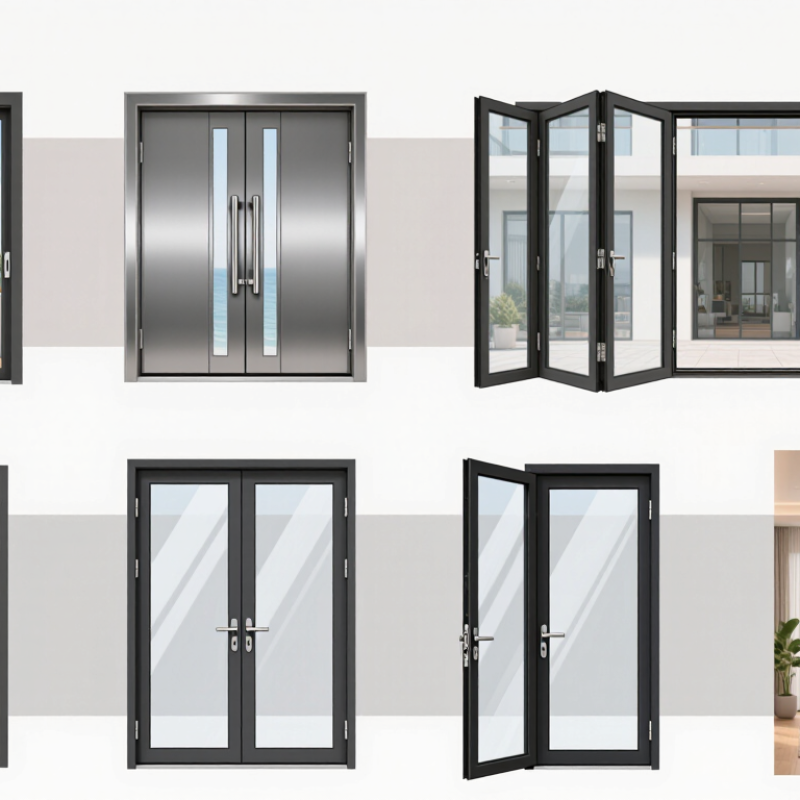
An aluminum door is a complete framed assembly, not simply a sheet of metal. Its main parts are the outer frame, door leaf, hinges, locking hardware, seals, and, in glazed designs, glass panels. The aluminum sections are commonly formed by extrusion, which creates hollow profiles with shaped internal chambers. The profile matters. Its depth and wall design affect stiffness, weight, and the space available for hardware.
For exterior use, some profiles include a thermal break: a low-conductivity strip separating the inner and outer aluminum sections. This can reduce heat transfer through the frame, though it cannot compensate for poor glass or installation. Weather seals around the leaf help limit drafts and water entry. Small details count. A compressed, uneven seal may leave a visible gap at one corner.
Manufacturing usually involves cutting profiles to size, joining the frame and leaf, fitting hardware, and adding a surface finish. Glazing is secured with compatible gaskets or beads. During selection, check how the door opens, where hinges sit, and whether the threshold suits the entrance. Installation deserves equal attention. A well-made door may bind if the opening is out of square, and even experienced teams can miss this on a rushed job. Measurements should be checked at several points before fitting.
Different rooms call for different aluminum door types. Sliding doors suit patios and compact rooms because their panels move sideways without using floor space. Hinged doors offer a familiar, wide opening for entrances, but need clear swing space. Folding systems can connect a living area to a garden; check the track and threshold carefully, especially where mobility or frequent cleaning matters. Small details matter.
Thermal-break aluminum frames help reduce heat transfer, while well-fitted seals limit drafts and water entry. For large glazed doors, ask for tested whole-unit U-factor and air-leakage ratings, not frame claims alone.
The U.S. Department of Energy’s Energy Saver guidance estimates that windows account for 25–30% of residential heating and cooling energy use. This is not a door-only figure, but it shows why glazing and seals deserve attention.
In hot, sunny locations, consider solar-control glazing; in windy or coastal settings, verify that the specified system suits local exposure. A useful specification on paper may still disappoint if installation is poor. Check the installer’s detailing, too.
Aluminum door performance depends on the opening, glazing, seals, and daily traffic—not frame material alone. Hinged doors usually press against perimeter seals when closed, making them practical for entries exposed to wind-driven rain. Sliding doors save floor space and suit patios, but their tracks need regular cleaning; grit can make a panel feel heavy. Folding systems create wide openings, though multiple joints mean more hardware to adjust. Pivot doors offer a striking, broad swing, but need clear floor space and careful sizing.
Glazed designs deserve particular attention. The U.S. Department of Energy’s Energy Saver guidance estimates that windows account for about 25–30% of residential heating and cooling energy use. That figure is not door-specific, but it highlights why glass area, solar heat gain, and frame-to-glass ratio matter in glazed doors. NFRC ratings help buyers compare U-factor and solar heat gain coefficient, while the NAFS standard evaluates air, water, and structural performance through testing. Ask for ratings for the complete door assembly, not just the glass. Details matter. A high-performing slider can still disappoint if its threshold traps water or its track is poorly installed. Even careful comparisons cannot predict every site condition.
Choosing an aluminum door starts with its location and daily use. A coastal home may need durable finishes and hardware suited to salty air. A busy office entrance needs smooth operation, clear sightlines, and glazing that balances daylight with privacy. Measure twice. Record the opening width, floor level, and nearby furniture before comparing hinged, sliding, or folding designs.
The frame matters as much as the style. Thermal breaks can reduce heat transfer, while suitable seals help limit drafts and rain entry. Ask for documented performance ratings that match the project’s climate and expected use. Large glass panels bring in daylight, but they can also increase glare and heat gain. Check the glazing specification, not just the frame material. A qualified installer can confirm whether the proposed configuration suits the opening and local building requirements.
Think about maintenance and access, too. Sliding doors save swing space, yet their tracks need regular cleaning, especially where sand or leaves collect. Hinged doors are familiar and easy to inspect, but need room to open fully. For commercial spaces, consider how often the door will cycle and whether its hardware is rated for that workload. The biggest model is not always the best fit. Sometimes the practical choice looks less dramatic, and that is a trade-off worth accepting.
2026 Top Aluminum Door Types for Global Buyers
What Should Global Buyers Check Before Sourcing Aluminum Doors?
Hinged, sliding, and folding aluminum doors suit different spaces and traffic patterns. Before choosing a type, confirm the opening size, panel weight, and expected daily use. A wide sliding door may save floor space, but its track needs careful drainage and cleaning. Small details matter.
Tips: Request profile drawings, alloy and temper details, finish specifications, and hardware schedules. Check that sample colors match the written finish standard. Ask for test reports relevant to wind resistance, water penetration, and air leakage. Requirements differ by project and location, so verify suitability with your design team.
Compare frame depth, thermal-break design, glazing compatibility, and stated tolerances. Confirm whether dimensions refer to the frame or the clear opening. Ask how products are packed, labeled, and protected against scratches during transport. Review lead times for custom sizes and replacement parts, not only standard units. A sample is useful, though one sample cannot reveal every production variation. I would also clarify who checks measurements before fabrication; this step is easy to overlook and costly to repeat.
Representative panel counts for common configurations—not market-share or performance data. Actual configurations vary by supplier and project.
What to check before sourcing: Confirm the required opening size and panel configuration, local thermal and safety requirements, glass specification, hardware and corrosion resistance, finish, installation details, warranty, and applicable test certificates. Compare performance ratings using the same test standards and units.
Hinged doors press against perimeter seals when closed. They can suit entries exposed to wind-driven rain. Check the full assembly.
They save floor space and work well for patios. Their tracks need regular cleaning. Grit can make a panel feel heavy.
Folding doors create wide openings. Multiple joints add hardware that may need adjustment. That detail is easy to miss.
Yes. They swing broadly and need clear floor space. Careful sizing matters.
Check the glass area, solar heat gain, and frame-to-glass ratio. Ask for ratings for the complete door assembly, not just the glass.
Look for information about wind resistance, water penetration, and air leakage. Test ratings help, but site conditions still matter.
Request profile drawings, alloy and temper details, finish specifications, and hardware schedules. Confirm frame depth, thermal-break design, glazing compatibility, and tolerances.
Confirm whether dimensions describe the frame or clear opening. Ask who checks measurements before fabrication. Also review packaging, labeling, scratch protection, lead times, and replacement parts. One sample cannot show every production variation.
An Aluminum Door is built around a lightweight, durable frame that can support different panel, glazing, and hardware configurations. In 2026, buyers can choose from hinged, sliding, folding, pivot, and other designs to suit entrances, patios, interior spaces, and commercial settings. Each type offers a different balance of space efficiency, ease of operation, daylight, privacy, and insulation, so the best choice depends on how the door will be used and the conditions it must handle.
For homes and businesses, selection should consider opening size, traffic levels, climate, maintenance needs, security features, finish, and compatibility with the surrounding building design. Global buyers should also review product specifications, material and finish details, dimensions, packaging, delivery arrangements, and the supplier’s quality-control process before placing an order. Comparing these factors helps buyers identify a door that fits both practical requirements and project expectations.